



Why smart sensors matter before bigger problems appear
Smart sensors are the quiet layer of home awareness. They notice change first, then send a clear signal while the issue is still small. That can mean spotting water under the sink, seeing a bedroom window open late at night, or getting a motion alert when nobody should be home.
On the marketplace, this category is less about flashy control and more about timely detection. That difference matters, as a sensor does its best work before a lock, light, or camera needs to respond. If you want a home that feels watchful without feeling noisy, this is where to begin.
You can also build a fuller setup by pairing sensors with smart home essentials, security cameras, or smart doorbells. But first, which sensor belongs in which room?
Match each sensor type to a real room and routine
Door and window sensors for entry points
Smart door window sensors for home work best where open and closed status matters most. Think front doors, balcony doors, nursery windows, and cabinets you want to monitor quietly. They are useful as they create a simple yes or no event that is easy to track and automate.
You get a clean sense of control. A quick glance at your phone can confirm whether a window stayed open during rain or whether someone arrived home after school. That small moment feels lighter, as you stop second guessing.
Motion sensors for halls, living rooms, and corners
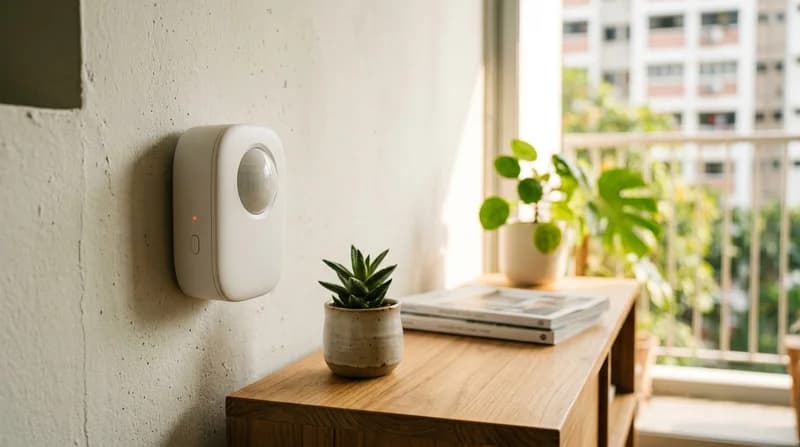
Smart motion sensors for indoor security shine in spaces where movement should be noticed fast. Hallways, entrances, stair landings, and living room walk paths are common choices. They are helpful as they cover a wider zone than a contact sensor and can trigger lights, alerts, or camera recording.
Placement changes everything. A sensor aimed too high or too close to a doorway may miss the natural sweep of movement. The right angle gives you a smoother, more reliable flow of alerts, with fewer surprises and fewer false alarms.
Leak sensors for kitchens, bathrooms, and laundry areas
Water leak sensors for kitchen and bathroom are made for the places people rarely check until damage appears. Slide one near a washing machine, under a sink, beside a toilet, or close to a water heater. They matter as a tiny puddle can spread silently long before it becomes visible.
The benefit is not only protection. It is the feeling of catching trouble while it is still small, cold, and easy to handle. That early warning can save flooring, cabinets, and a very stressful morning.
Temperature and humidity sensors for steady comfort
Temperature humidity sensors for smart home setups help rooms feel more balanced. Bedrooms, baby rooms, home offices, and storage areas all benefit from steadier readings. They are worth considering as comfort is not only about heat, but also about damp air, dry air, and how the room feels on your skin.
These sensors can also work beautifully with humidifiers, air purifiers, and fans. Once you see room conditions clearly, what else in your home might start feeling easier?
Choose the right connection before anything else
One of the biggest shopping mistakes is falling for a low price and missing the connection type. Wifi smart sensors for home alerts often feel simple as they connect directly to your network. They can suit smaller setups or homes where you want fewer extra devices.
Zigbee smart sensors for automation often appeal to people building a broader system. They are popular as they can offer lower power use, quicker scene triggers, and stronger multi device coordination when paired with a hub. That can make the whole setup feel smoother in daily life.
Before choosing, check four things.
- Your current app or ecosystem
- Whether a hub is required
- Real time alerts or local logging only
- Battery type and expected battery life
If you already use smart bulbs, smart locks, or smart LED light strips, sensor compatibility becomes even more important. A good sensor should fit your system naturally, as friction is what makes smart homes feel less smart.
Costly mistakes to avoid when choosing smart sensors
Small mistakes here can create big frustration later. The sensor may look perfect in photos, yet daily use tells a different story.
- Ignoring hub requirements. This leads to surprise setup limits, as some models need extra hardware before they can send useful alerts.
- Choosing by price alone. A cheaper motion sensor may miss hallway movement, as detection angle and range matter more than a tiny saving.
- Missing placement conditions. A leak sensor placed too high may stay dry while water spreads below it.
- Assuming every sensor alerts the same way. Some only record events, as not every model supports instant app notifications.
- Forgetting battery life and mounting style. A sensor that is awkward to reach or annoying to replace often gets neglected.
The Chinese marketplace offers huge variety, which is great for choice. It also means comparison matters more. The best smart sensors for apartment safety are not always the fanciest ones. They are the ones that fit your room, your habits, and your existing setup with the least friction.
How to build a practical sensor setup room by room
For apartments
Start with one door sensor, one motion sensor, and one leak sensor. This gives broad coverage without making the setup feel complicated. Home monitoring sensors on AliExpress can be especially useful for apartment living, as small spaces still have high risk points.
For family homes
Add contact sensors to back doors and child accessible windows. Use motion sensors in halls and common areas. Add temperature and humidity tracking in bedrooms for steadier comfort through the night.
For travel peace of mind
Focus on real time alerts, battery life, and app clarity. The platform has many options, yet the right travel setup is simple. You want fast signals, easy status checks, and fewer doubts while you are away.
To round out your setup, you may also want robot vacuums for daily upkeep or handheld vacuums for quick cleanups after small leaks or dusty window areas. The result is a home that feels more responsive from the first alert to the final fix.
What a better sensor choice feels like every day
The best result is not more notifications. It is better timing. A soft phone alert before water spreads. A visible status check before bed. A quieter mind while you are out. That is why AliExpress smart sensors for home monitoring can feel so valuable in daily life.
On AliExpress Singapore, the smartest choice is usually the one that solves a clear room based problem first. Start with the event you most want to catch early, then build outward. Once one room feels calmer, the next decision becomes much easier.