






Open-ear listening that keeps your surroundings in the mix
The Baseus Bowie MF1 is built for people who want music without sealing off the world around them. That makes it a practical fit for outdoor runs, office use, and long commutes where situational awareness matters more than isolation.
Unlike in-ear models that press into the canal, this design sits outside the ear and relies on directional sound transmission. The result is a lighter, less intrusive feel that many users describe as comfortable even during extended wear, so the real question becomes how much sound quality survives that open design.
16 mm drivers and LDAC: where the sound gets its weight
The 16 mm dynamic driver is the main reason this model can sound fuller than many open-ear alternatives. Bass is still physics-limited in this format, but the bass enhancement algorithm gives low end more body, which helps drums and pop tracks feel less thin.
LDAC support raises the ceiling for detail on compatible devices, and that matters if you stream higher-bitrate audio or use a phone that can take advantage of it. In practical terms, you get cleaner separation and a more textured top end than you would expect from a sport-focused open-ear set at this level, so the microphone system has a lot to prove too.
4-mic ENC for calls in busy streets
Call performance is one of the stronger selling points here because the earphones use a 4-mic ENC setup with AI processing and wind-noise reduction. That combination is designed to keep speech intelligible when traffic, fans, or café noise start creeping into the background.
According to customers, the microphone is a clear strength, and that lines up with the hardware on paper. If you take work calls while walking or cycling, this is the feature that makes the set feel more like a serious daily driver than a simple workout accessory.
60-hour battery life for long training weeks
Battery life is another area where the Bowie MF1 feels well judged for its category. You get up to 12 hours on a single charge and up to 60 hours with the case, which means several days of mixed use without constantly hunting for a USB-C cable.
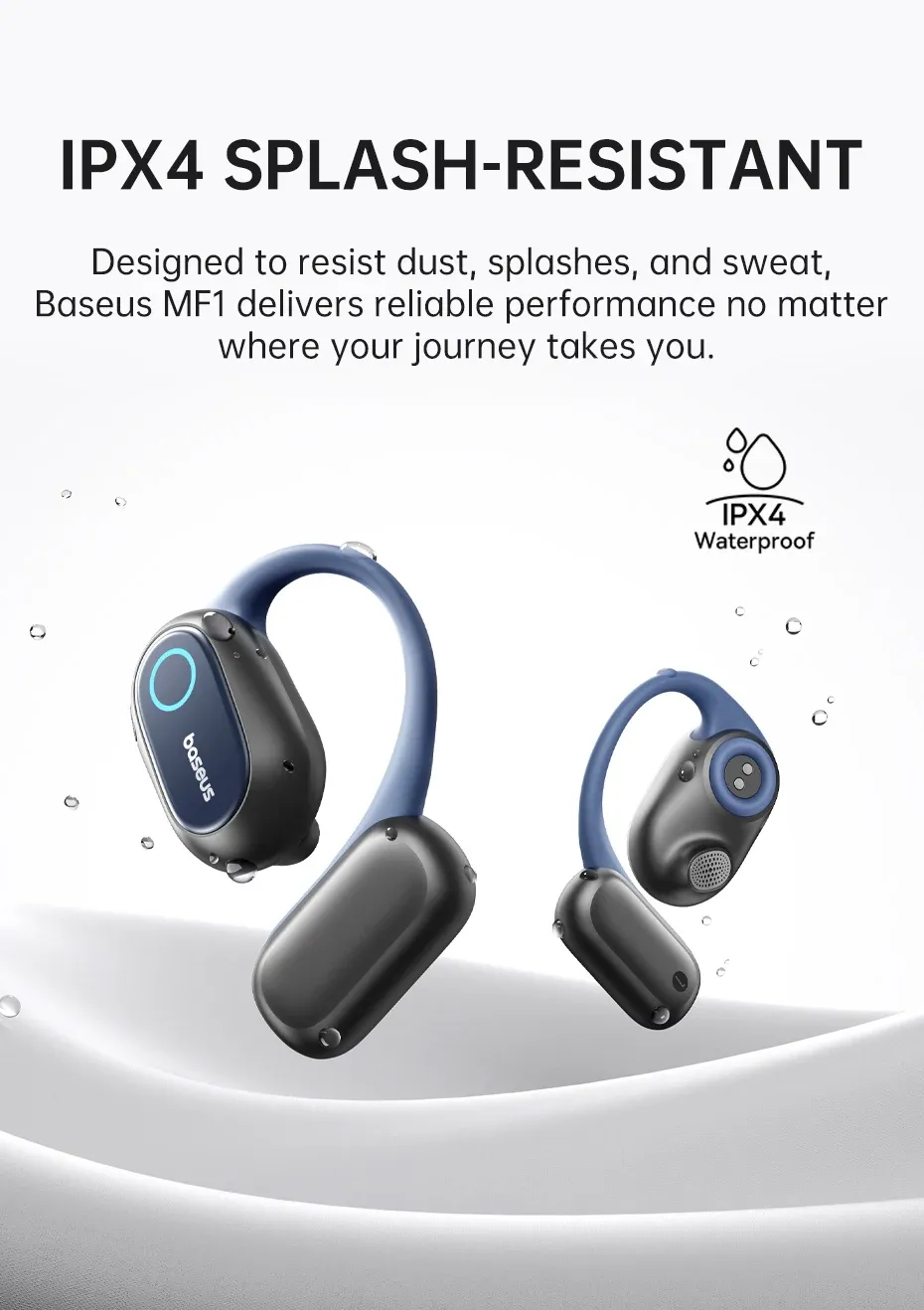
That kind of endurance is useful for users who rotate between gym sessions, office calls, and evening walks. The charging case keeps the routine simple, and the IPX4 splash resistance adds a bit of confidence when sweat or light rain shows up unexpectedly, which is exactly when a sport earphone earns its keep.
Fit and comfort: the open-ear trade-off you should know
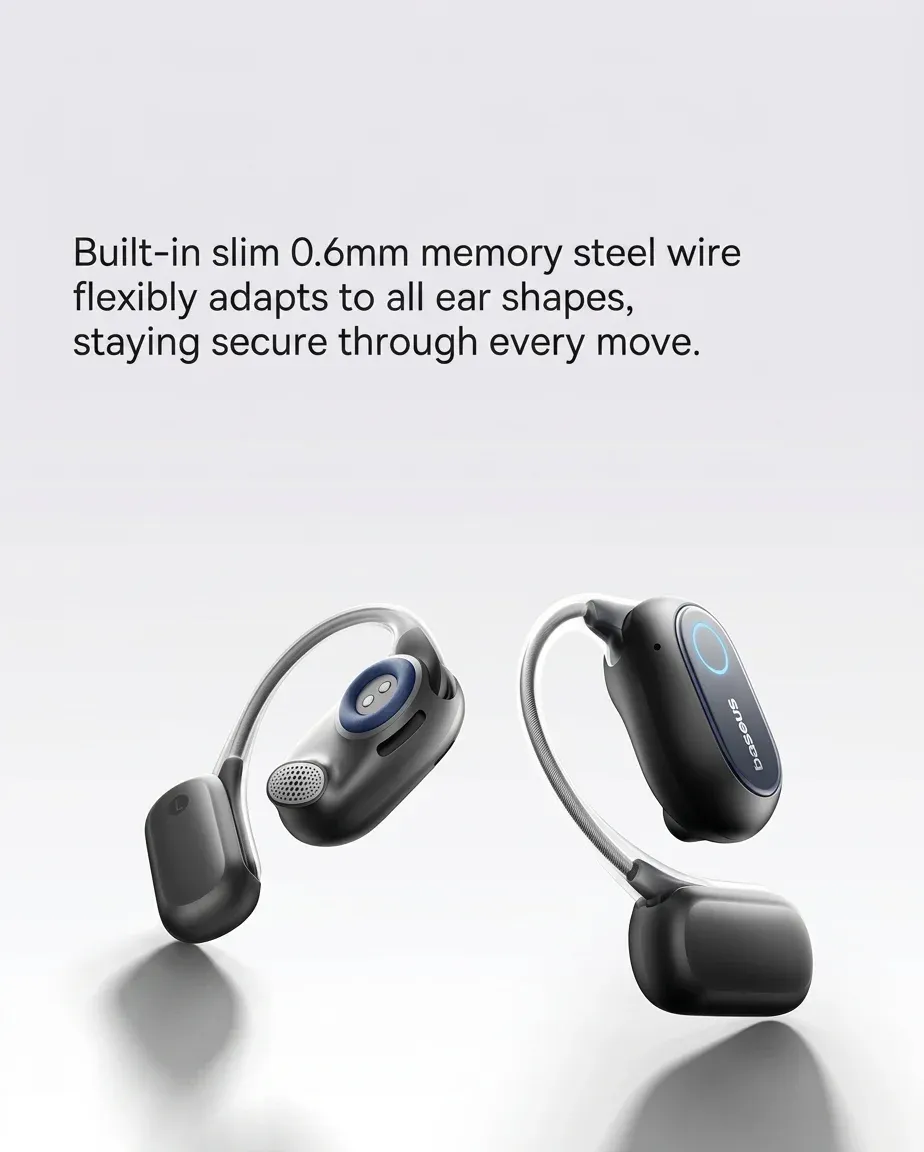
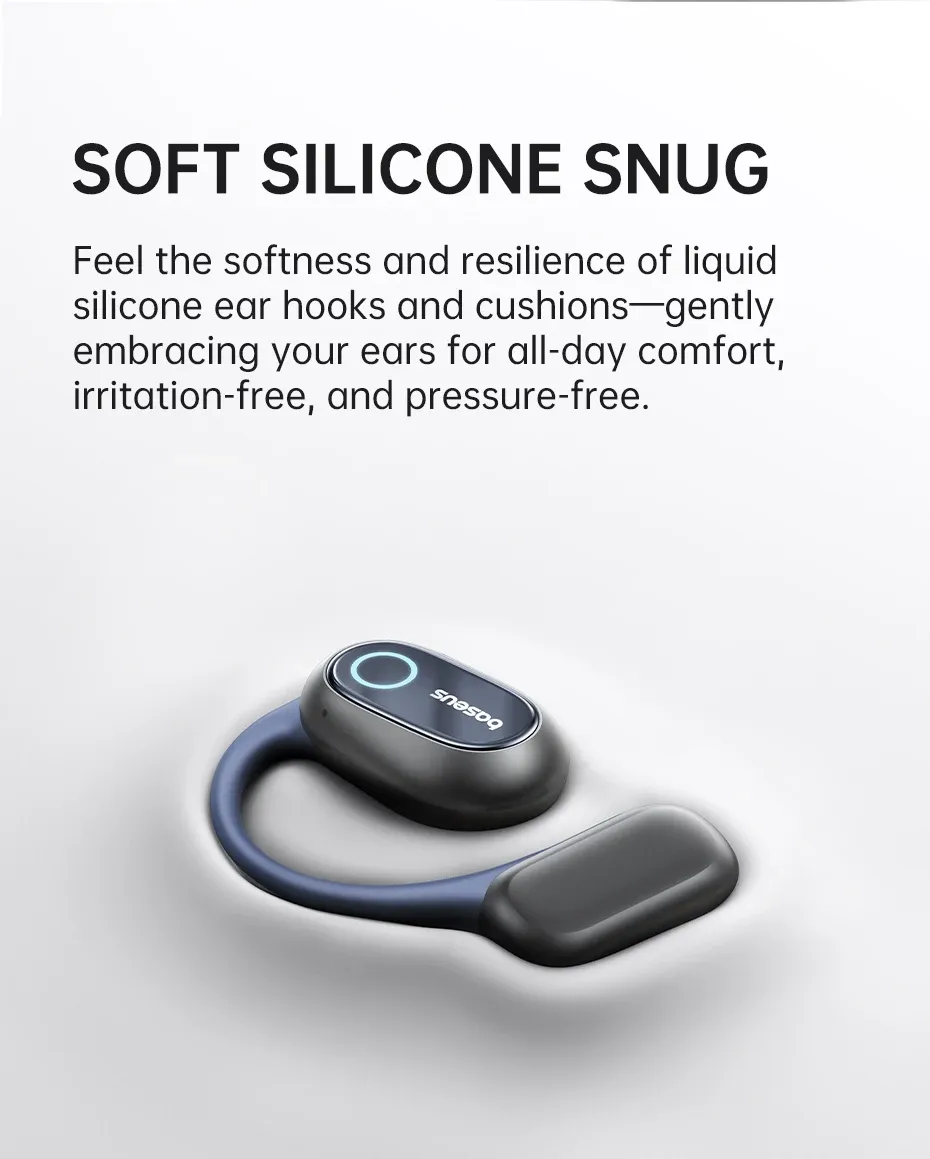
The earhook-style fit is one of the most important practical details, because open-ear models live or die by stability. The slim memory-steel structure is meant to hold position without the pressure that can build up in traditional earbuds, and that helps during steady movement like jogging or gym work.
There is a catch: open-ear designs do not suit every ear shape equally well, and some users with larger ears may find the fit less secure than expected. If you want deep passive isolation, this is not the right format, but if you prefer comfort and awareness over seal-based noise blocking, the design starts to make sense very quickly.
Bluetooth 5.4 and app support make it feel current
Bluetooth 5.4 and dual-connection support help the MF1 feel modern rather than budget-basic. Connection stability should be strong for everyday use, and the Baseus app support gives you room to tune the experience instead of accepting a fixed sound profile.
That flexibility matters because open-ear earbuds often sound better with a little adjustment, especially if you want more vocal clarity or a firmer bass presentation. For readers browsing AliExpress Singapore, this is the kind of feature set that separates a casual sports earbud from one that can stay in rotation all week, so what should you watch for before choosing it?
- Best for users who want awareness while listening
- Strong battery life for training and commuting
- Clearer calls than many open-ear rivals
- LDAC support adds value for compatible phones
- Fit may vary depending on ear shape