







Translation earbuds that solve a real travel problem
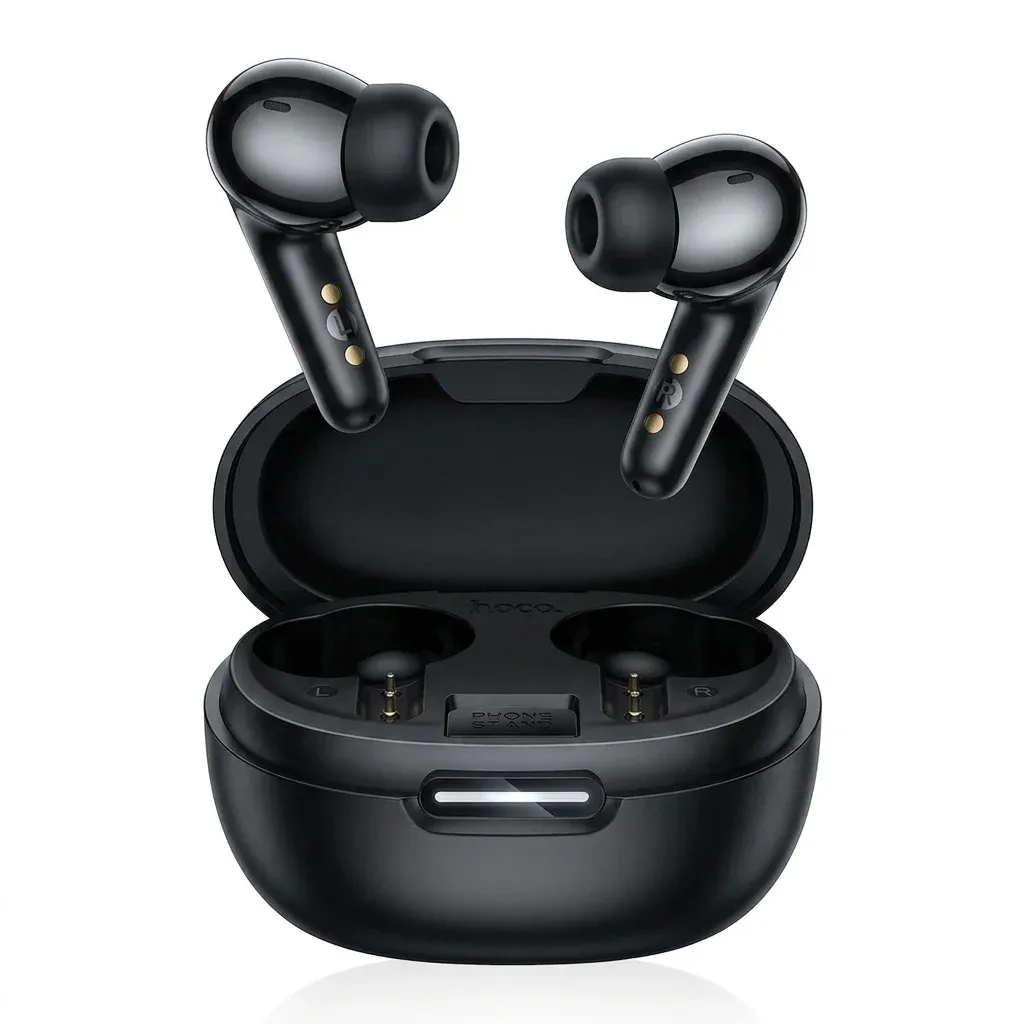
The HOCO EQ100 is aimed at users who want one device for music, calls, and quick language support without carrying a separate translator. In the AliExpress Singapore niche, that combination matters because it turns a budget TWS set into a more versatile travel accessory.
HOCO has built a solid reputation on practical audio gear with clean industrial design and dependable basics, and this model follows that pattern. It is not trying to be a premium flagship; it is trying to be useful, compact, and easy to integrate with a phone app, which is exactly where it becomes interesting.
AI translation: useful feature or app gimmick?
The headline feature is support for AI dialogue and online translation in 134 languages, and that is the part most likely to decide whether the EQ100 feels clever or unnecessary. Based on user feedback, the translation function can work well in straightforward conversations, while one reviewer noted that the app-side AI can feel like a gimmick in some scenarios.
That split is worth understanding before you get it. If you need a backup tool for airport questions, hotel check-ins, or short business exchanges, the feature set looks genuinely practical; if you expect perfect real-time interpretation in noisy environments, the limitations of app-based translation still apply.
Bluetooth 5.4 and AAC: what the wireless link changes
Bluetooth 5.4 is a meaningful upgrade for a low-cost earbud because it usually improves pairing stability and reduces dropouts during everyday use. The EQ100 also supports AAC and SBC codecs, so iPhone and Android users get a familiar, mainstream wireless pipeline rather than an experimental audio stack.
With a maximum wireless range of under 10 metres, this is clearly designed for pocket-and-phone use rather than roaming across a room. That makes it a better fit for commuting, office desks, and short gym sessions than for long-range home listening, which is the trade-off you would expect at this level.
Sound profile: two drivers, 10 mm units, and a lively presentation
HOCO lists two drivers and 10 mm driver diameter, which suggests a sound signature built for a fuller, more energetic presentation than tiny single-driver buds. Real customer feedback leans positive here, with comments describing the sound as loud, satisfying, and surprisingly strong for the class.
The 20 Hz to 20 kHz frequency range is standard on paper, but the practical benefit is a familiar all-round tuning that should handle podcasts, pop, and casual gaming without sounding thin. If you want clinical studio detail, this is not the target; if you want punchy everyday audio with a bit of body, the spec sheet points in the right direction.
Battery and case size: compact enough for daily carry
The earphones use a 60 mAh battery per bud and a 320 mAh charging case, with up to 10 hours of use claimed. That is enough for a workday of mixed calls and music, and the 40 g total weight keeps the case light in a pocket or sling bag.
The ABS shell should keep the set feeling sturdy without adding bulk, and the Type-C charging port makes topping up easy with the same cable many users already carry. For frequent travellers, the small 58 x 51 x 30 mm footprint is a real advantage because it disappears into a pouch instead of taking over it.

App control and hall switch: small details that improve daily use
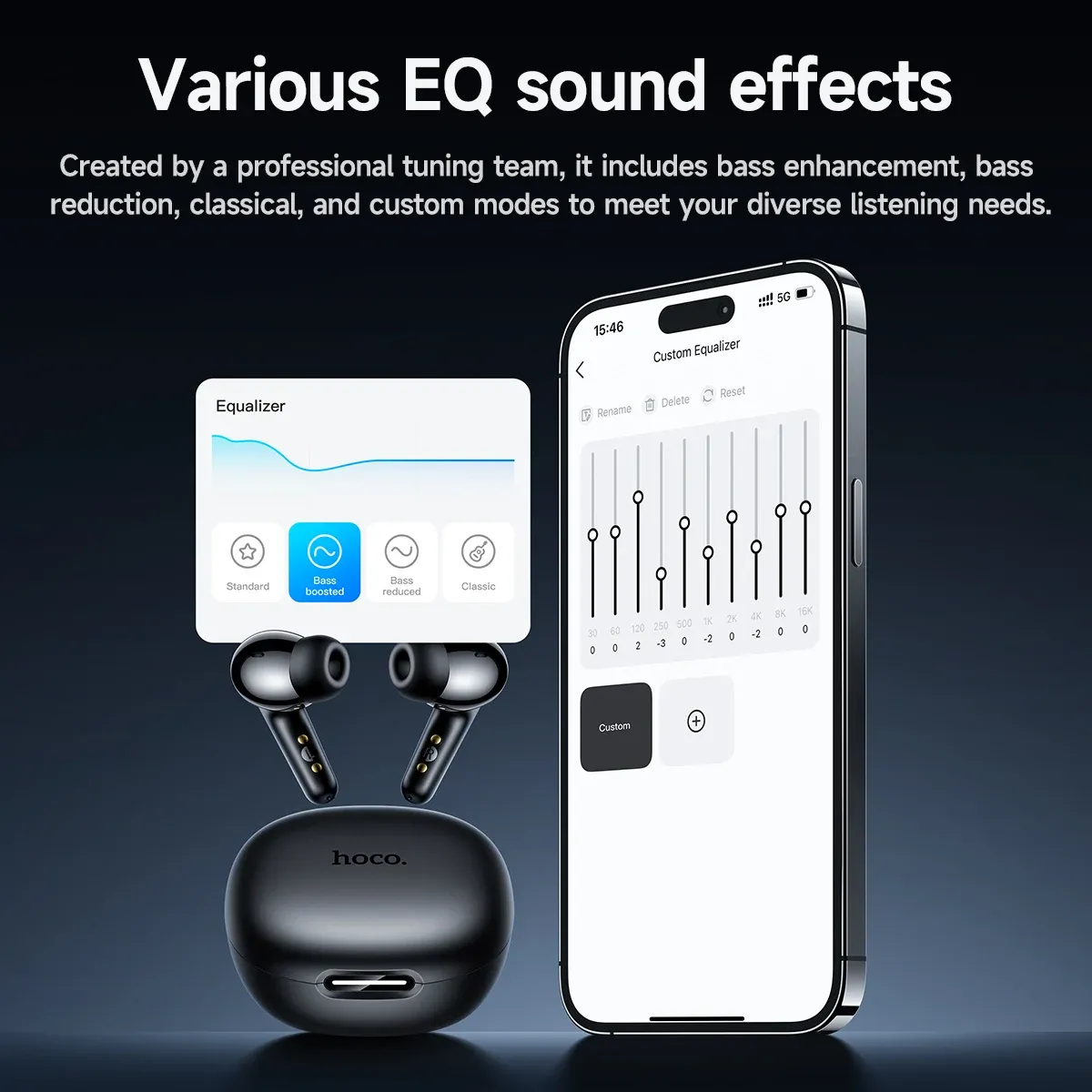
Support for app control gives the EQ100 more flexibility than a basic no-app earbud, especially if you want to manage translation features or adjust behavior from the phone. The hall switch support means the case can help with faster wake and pairing behavior, which is one of those tiny conveniences you notice after a week of use.
There is no active noise cancellation and no physical control button, so the user experience is more straightforward than feature-heavy. That makes the EQ100 less about isolating you from the world and more about keeping conversation, playback, and translation in one simple workflow.
Who will get the most value from it?
This model suits travellers, office users, and anyone who wants an inexpensive TWS set with a smart-feature angle rather than a pure audio-first focus. Customers have also highlighted durable materials and strong translation performance, which lines up with the product’s practical positioning.
If you mainly want music, calls, and a compact case, the EQ100 already makes sense on its own. If you are curious whether AI translation can be genuinely useful in a budget earbud, this is the point where the product becomes more than a standard wireless set, and that is what makes it worth a closer look.