







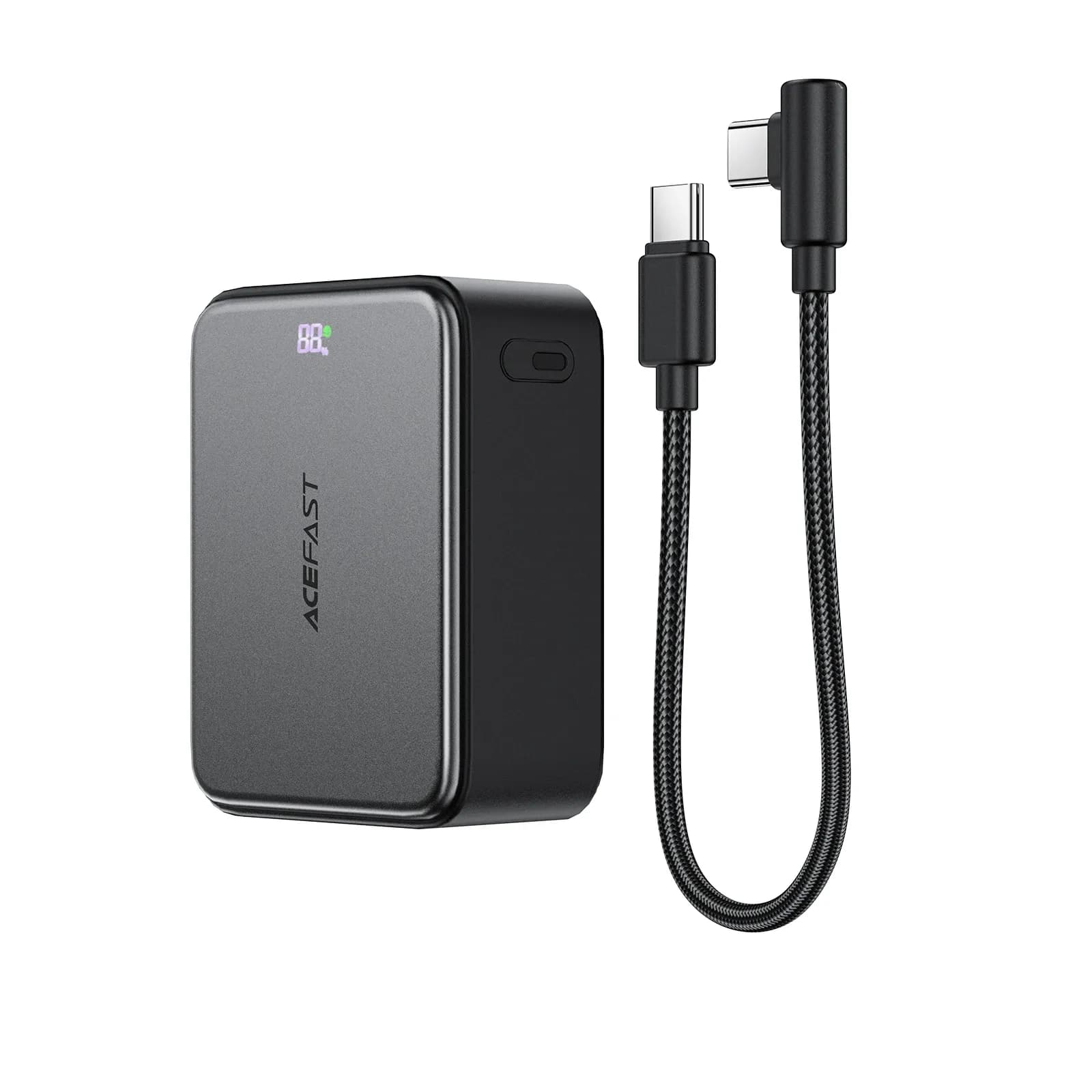

Small enough to disappear, strong enough to matter
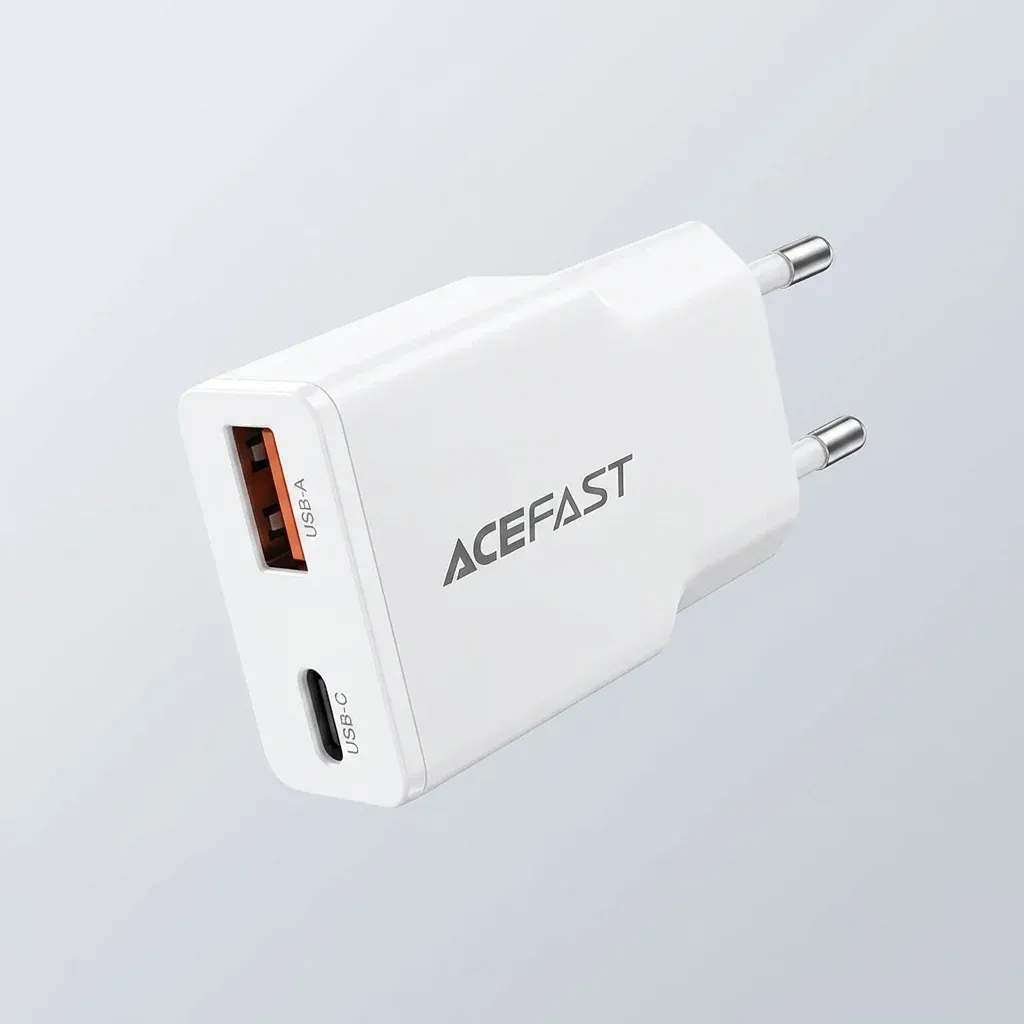
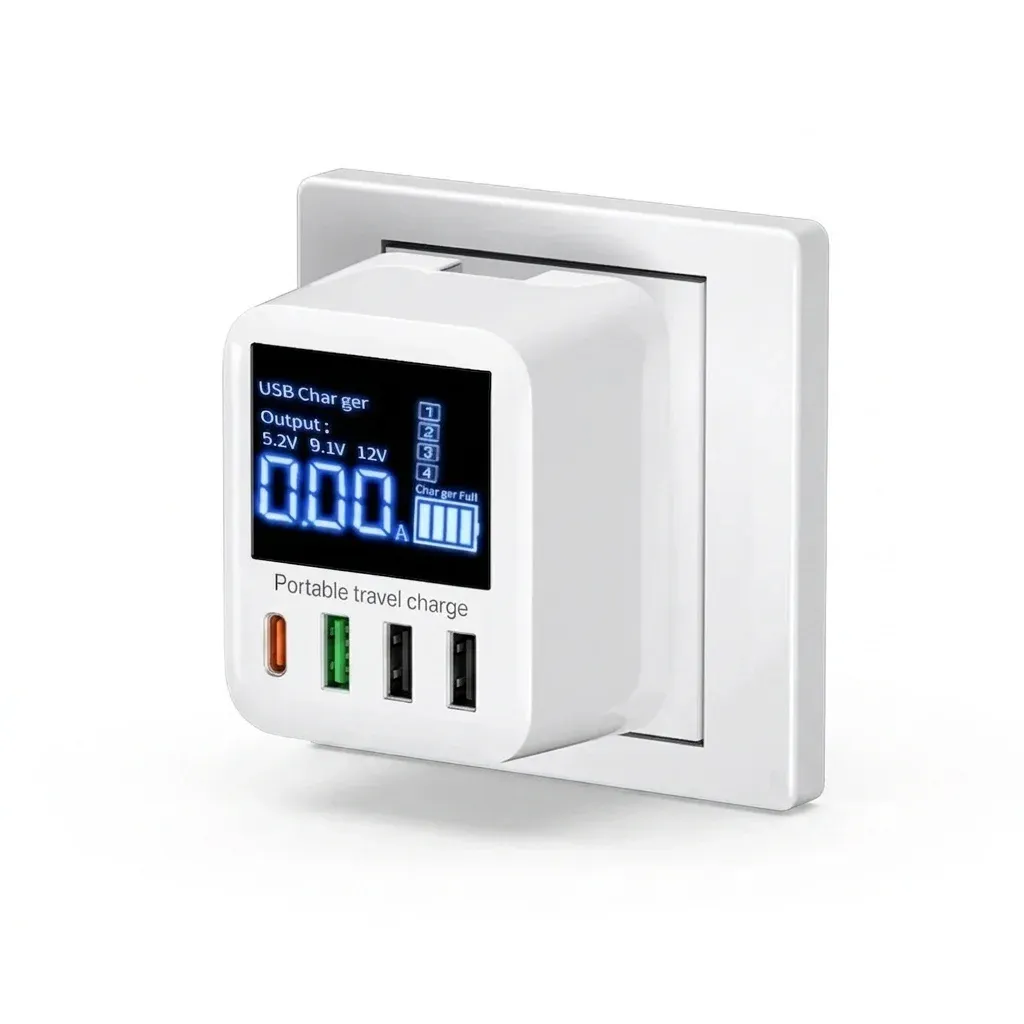
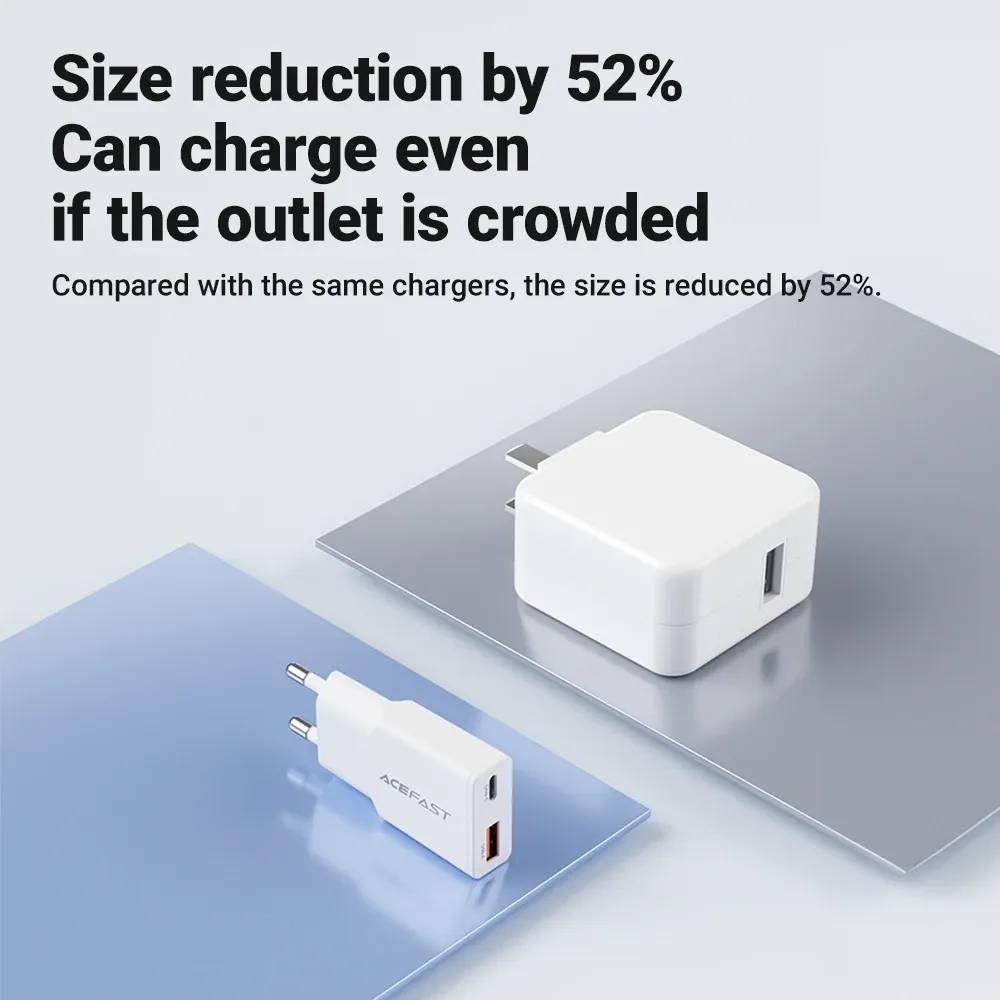
This ACEFAST charger solves a familiar problem: standard phone adapters take up too much space for the power they deliver. The ultra-thin GaN body keeps the plug footprint low, so it sits closer to the wall and slips into a pouch without bulking up your carry.
That compact shape is the main reason users keep describing it as smaller than expected, especially beside older 20W bricks. It is the kind of accessory that feels designed for everyday carry first, which makes the next question more important: how much real charging speed does that tiny shell hold?
30W USB-C output with practical fast-charge support
The USB-C port is rated at 30W and supports USB PD, Samsung Adaptive Fast Charge, and Huawei FCP, so it is built for modern phones that can negotiate higher intake safely. For an iPhone 15/16 Pro Max or a Galaxy S24, that means you can top up quickly during a coffee break instead of leaving the phone tethered for long stretches.
The USB-A port adds 18W support for older cables and smaller devices, while using both ports together drops the shared output to 5V/3A. In practice, this makes it a better travel adapter than a multi-device desktop charger, because it prioritizes one strong charge or two lighter ones rather than trying to do everything at once.
Why GaN matters in a travel plug
Gallium nitride technology is not just a spec badge here. It helps the charger stay smaller and more efficient, with less heat waste than older silicon designs, which is useful when the plug is tucked behind a bedside table or packed beside a power bank.
Real-world feedback supports that positioning: customers repeatedly mention the size, quick charging indicator, and travel-friendly form factor, while a few note mild warmth under load. That trade-off is typical for compact GaN chargers, so the real question becomes whether the safety package is strong enough for daily use.
Flame-retardant shell and protection logic
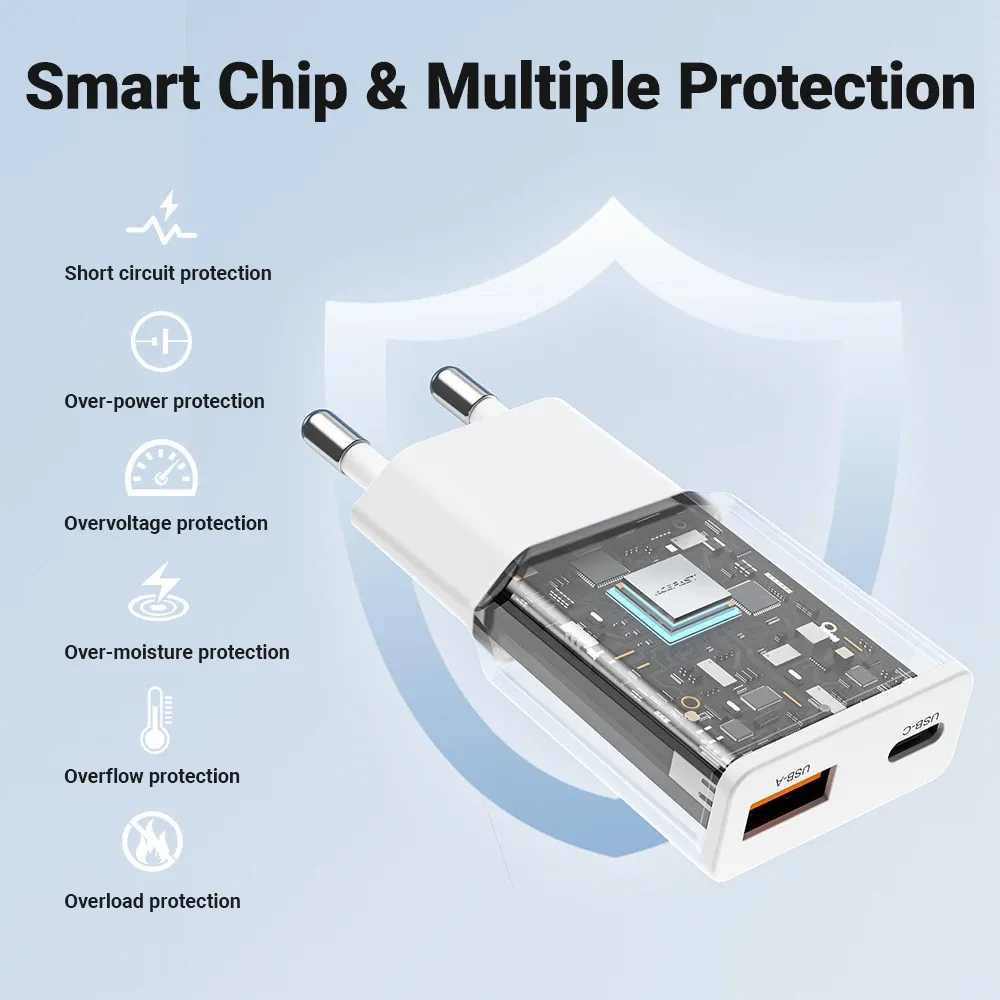
ACEFAST uses flame-retardant PC for the housing, paired with a smart chip that is designed to handle overvoltage, overcurrent, and overpower protection. The result is a charger that feels built for routine use rather than occasional emergency charging, especially in hotels, offices, and shared outlets.
CE and RoHS certification add another layer of confidence for buyers who want basic compliance signals on a budget-friendly charger. For AliExpress Singapore readers, that matters because the best low-cost charging gear is not just about wattage; it is about whether the plug behaves predictably when the cable, phone, and wall socket all meet at once.
Who should get this charger?
This model makes the most sense for users who want a lightweight backup charger, a compact travel adapter, or a minimal bedside plug for one phone and one small accessory. It is less suited to people who need laptop-class charging or a multi-port hub with higher simultaneous output, which is where larger 45W and 65W models still have an edge.
At S$3.36, the value proposition is unusually strong if you want a branded GaN charger without paying for features you will not use. The design looks simple, but the combination of size, certification, and 30W USB-C output is what gives it staying power in a crowded AliExpress charging aisle.