







Four-device charging without turning the outlet into a cable pile
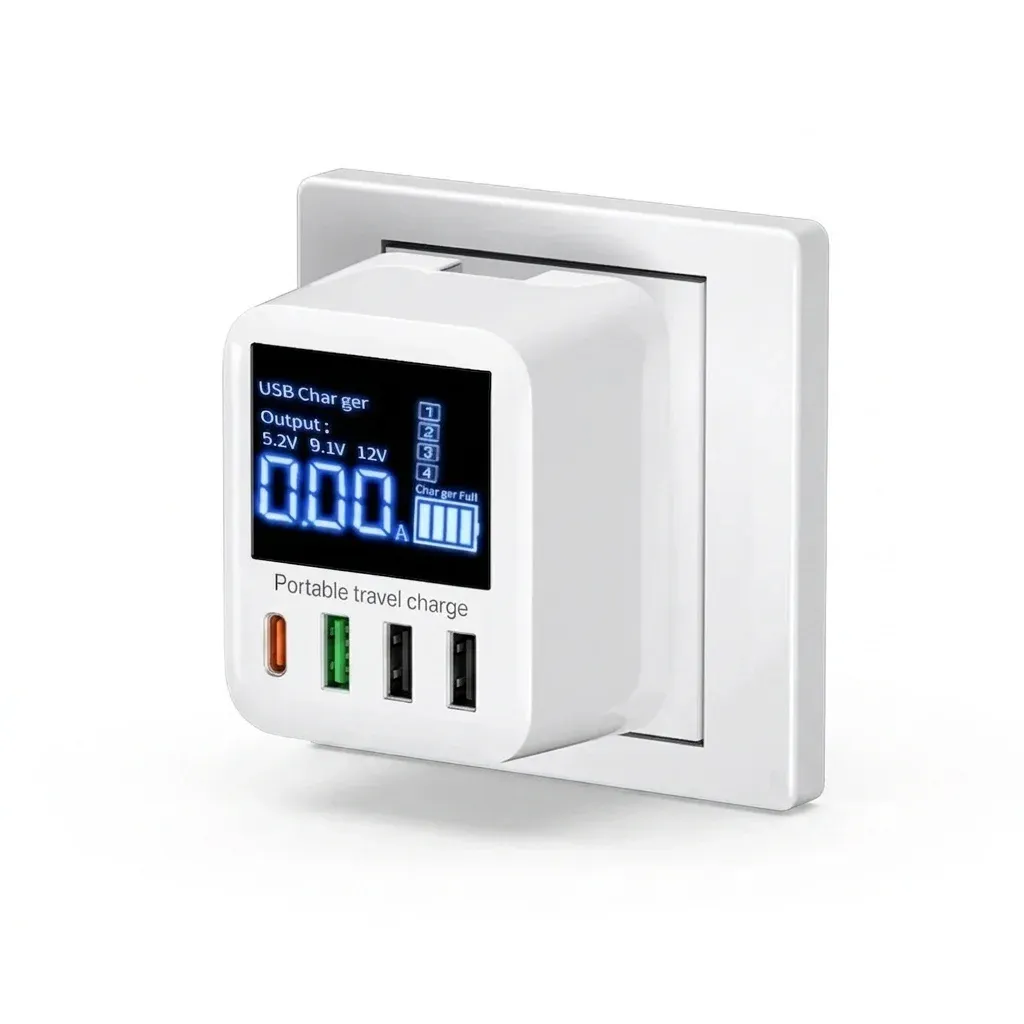
The ASOMETECH 40W wall charger solves a simple problem: too many devices and too few free sockets. With four output ports, it lets you keep a phone, earbuds, power bank, and smartwatch topped up from one AC source, which is exactly the kind of utility that makes compact travel chargers useful.
Its mix of two USB-A ports and two USB-C ports gives it more flexibility than basic single-port bricks, especially if your household still uses older cables alongside newer Type-C accessories. That balance matters more than raw wattage when you are charging mixed gear, so what does the display actually tell you?
LED display: useful feedback, not just decoration
The built-in LED screen is one of the charger’s more practical features because it lets you see charging activity at a glance. According to users, it can help spot the wrong cable or a weak connection faster, which is handy when several devices are plugged in at once.
One review also noted that the screen may go blank after a while while charging continues, so it should be treated as a status aid rather than a precision meter. That is still better than guessing, especially if you often leave devices charging overnight or on a desk where visibility matters, but how fast is it in real use?
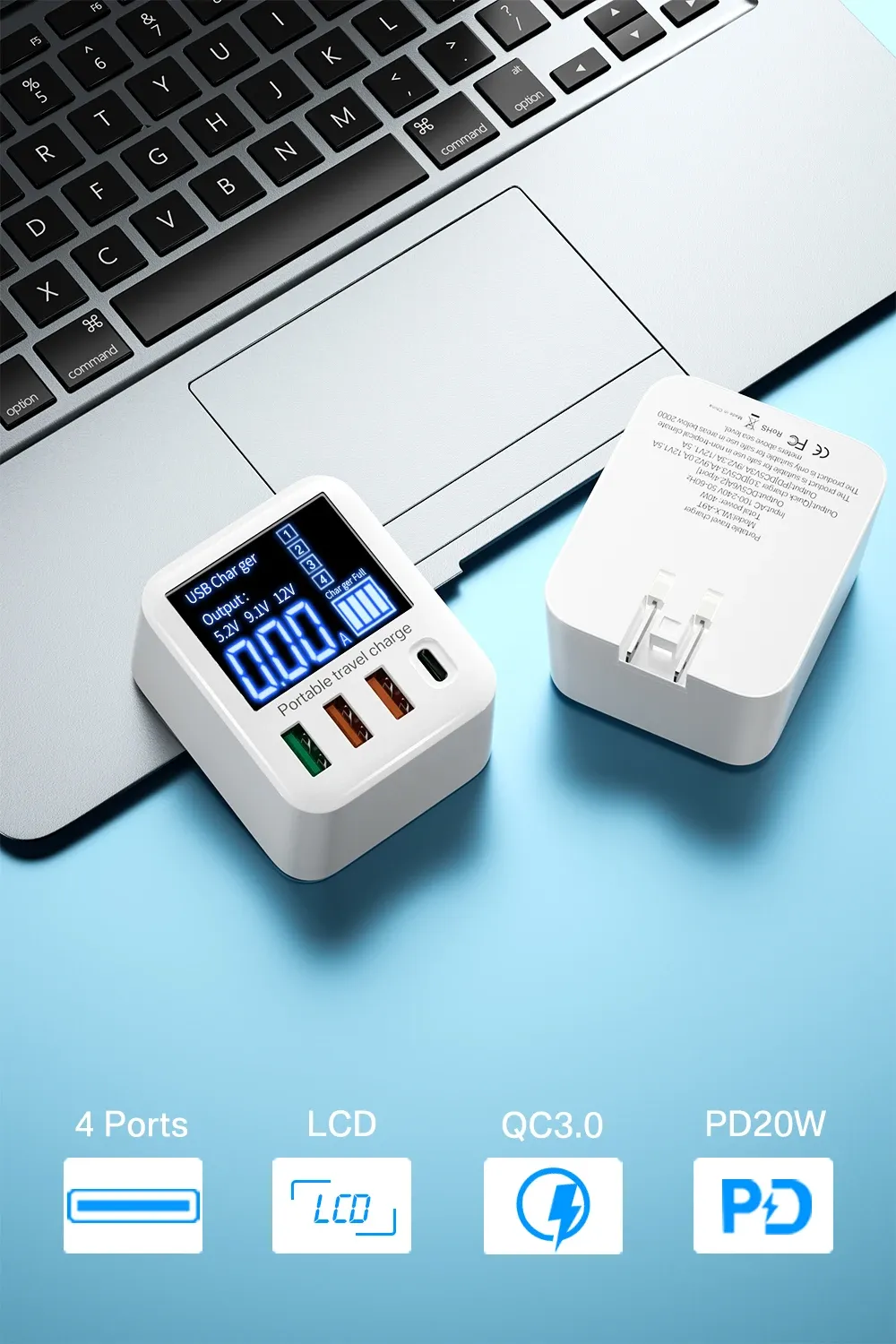
40W output: enough for everyday fast top-ups
At 40W maximum output, this charger is aimed at efficient daily charging rather than laptop-class power delivery. Its support for USB PD, Quick Charge, Huawei Quick Charge, and BC1.2 makes it compatible with a wide range of phones and accessories, though the actual speed depends on the port and the device.
Real-world feedback suggests the USB-C port is the strongest candidate for fast charging, while some users reported lower output on the USB-A side. That makes it a better match for smartphones and smaller devices than for demanding tablets, so the next question is whether its travel-friendly build is convincing.
Travel format with a few trade-offs
This is a compact wall charger, but not a premium GaN model, so it may sit a little bulkier in the socket than newer ultra-thin alternatives. One user mentioned that it can dangle from the outlet, which is worth noting if you plan to use it in tight wall spaces or with heavy cables.
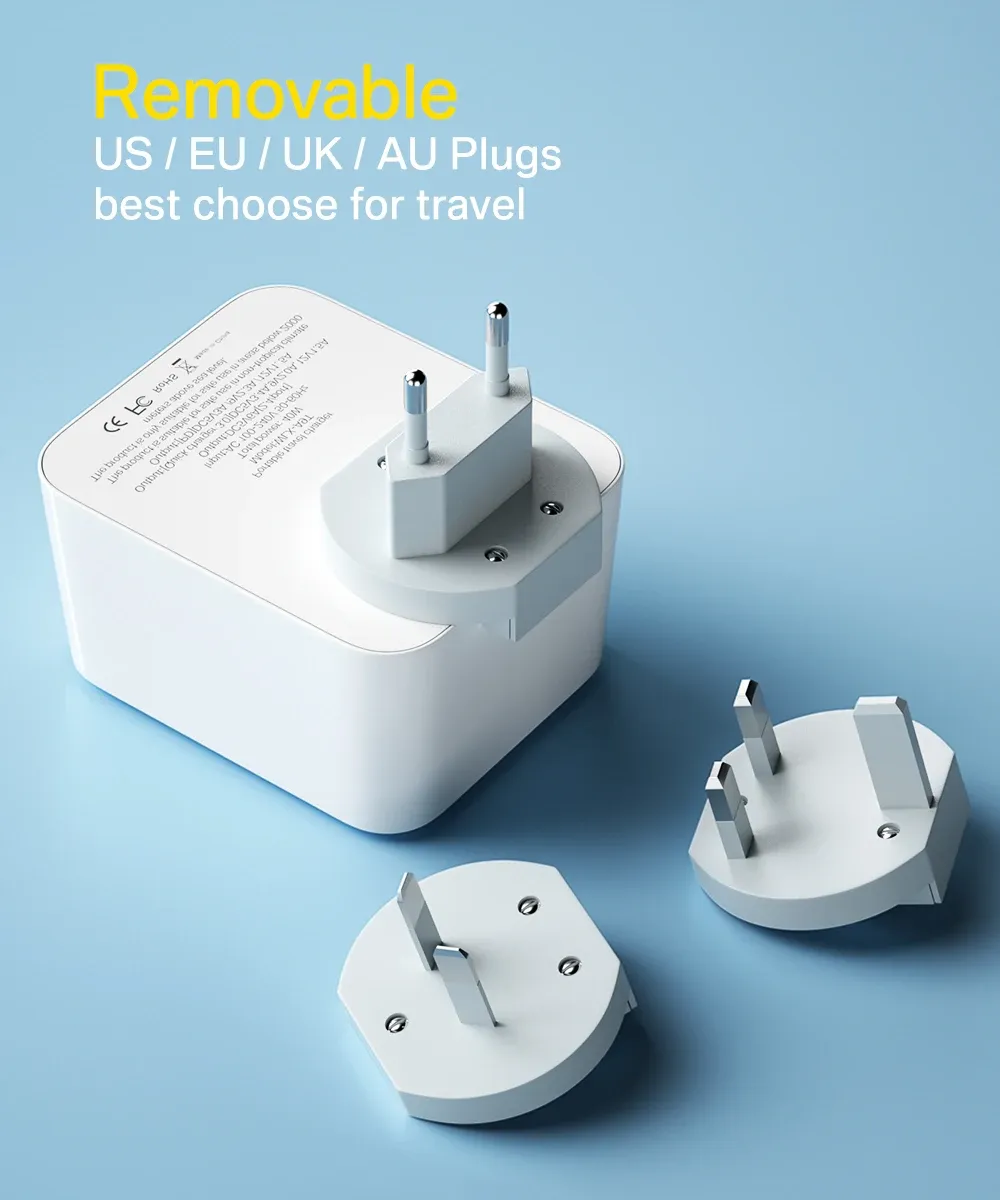
Even so, the certification list is reassuring for a budget charger, with CCC, CE, ROHS, FCC, and UL mentioned in the listing. For AliExpress Singapore readers comparing it with simpler 2-port chargers, the appeal is clear: more ports, visible charging feedback, and broader protocol support in a single brick, which device setup would benefit most from that mix?
Best fit for mixed-device charging
This charger makes the most sense for users who rotate between iPhone, Huawei, Xiaomi, and Samsung devices and want one compact hub at the wall. It is also useful for desks, bedside tables, and travel bags where a live display and multiple ports can reduce clutter.
The strongest case for it is convenience, not raw power leadership, and the real reviews reflect that split: most are positive, while the main complaints focus on port output expectations and the screen behavior. If you want a simple charger with clearer feedback than a standard brick, this one stays interesting.