







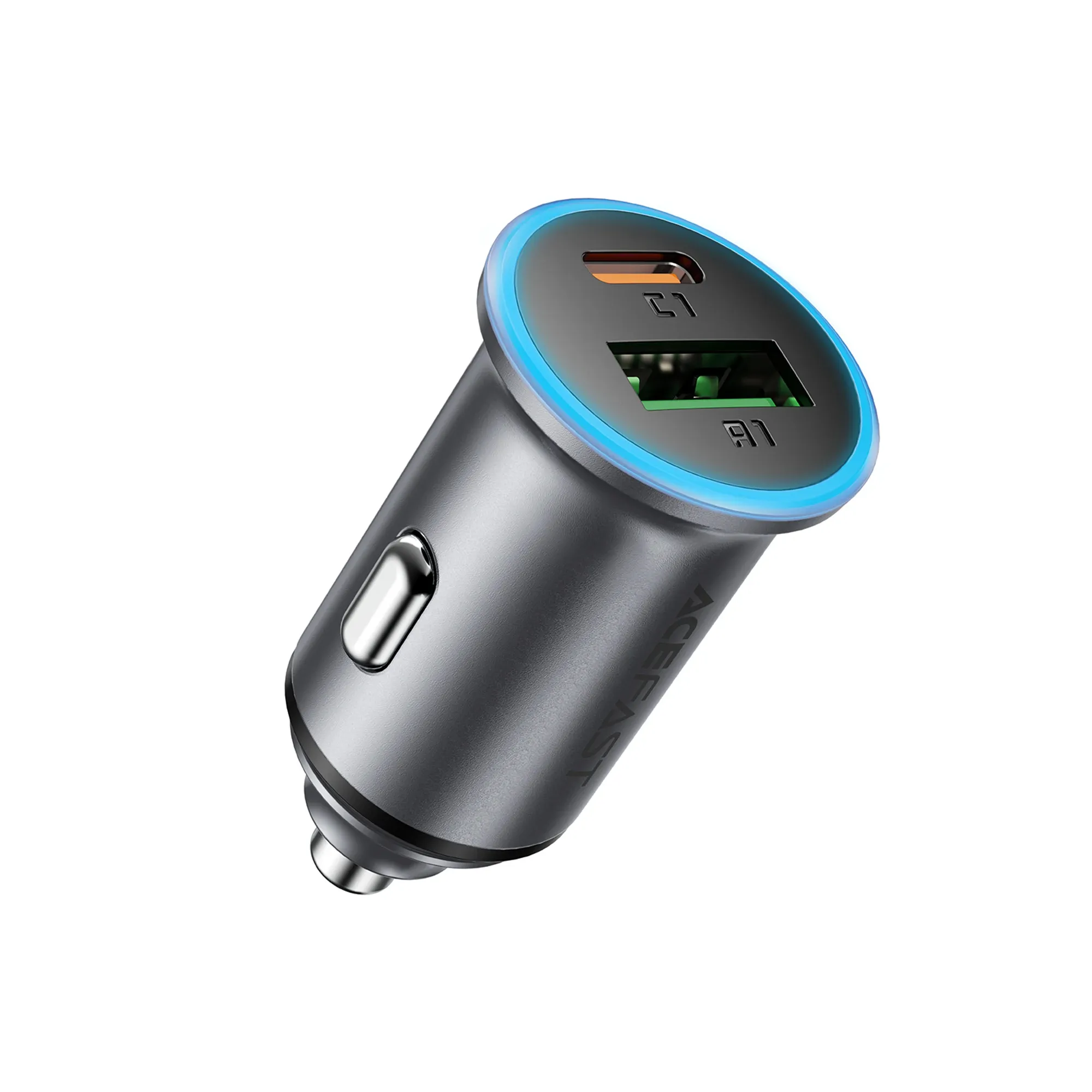
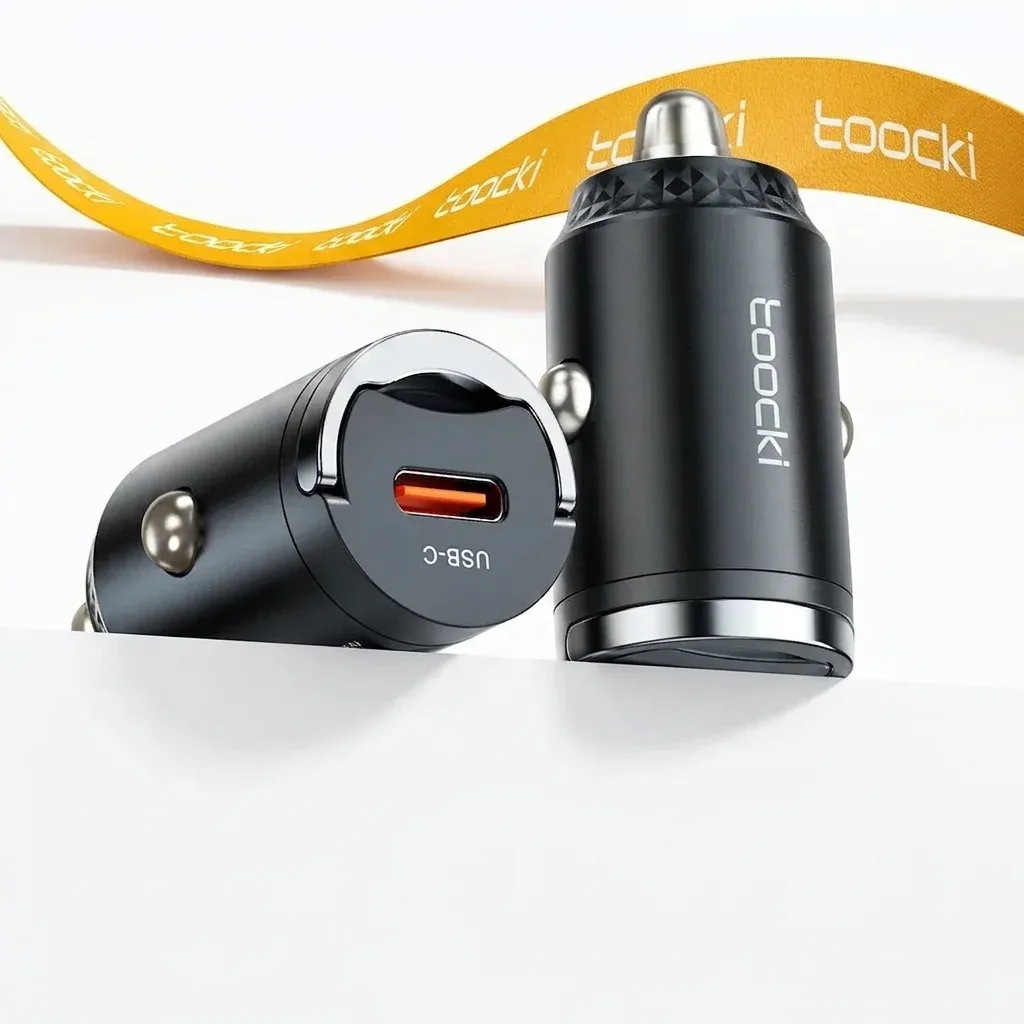
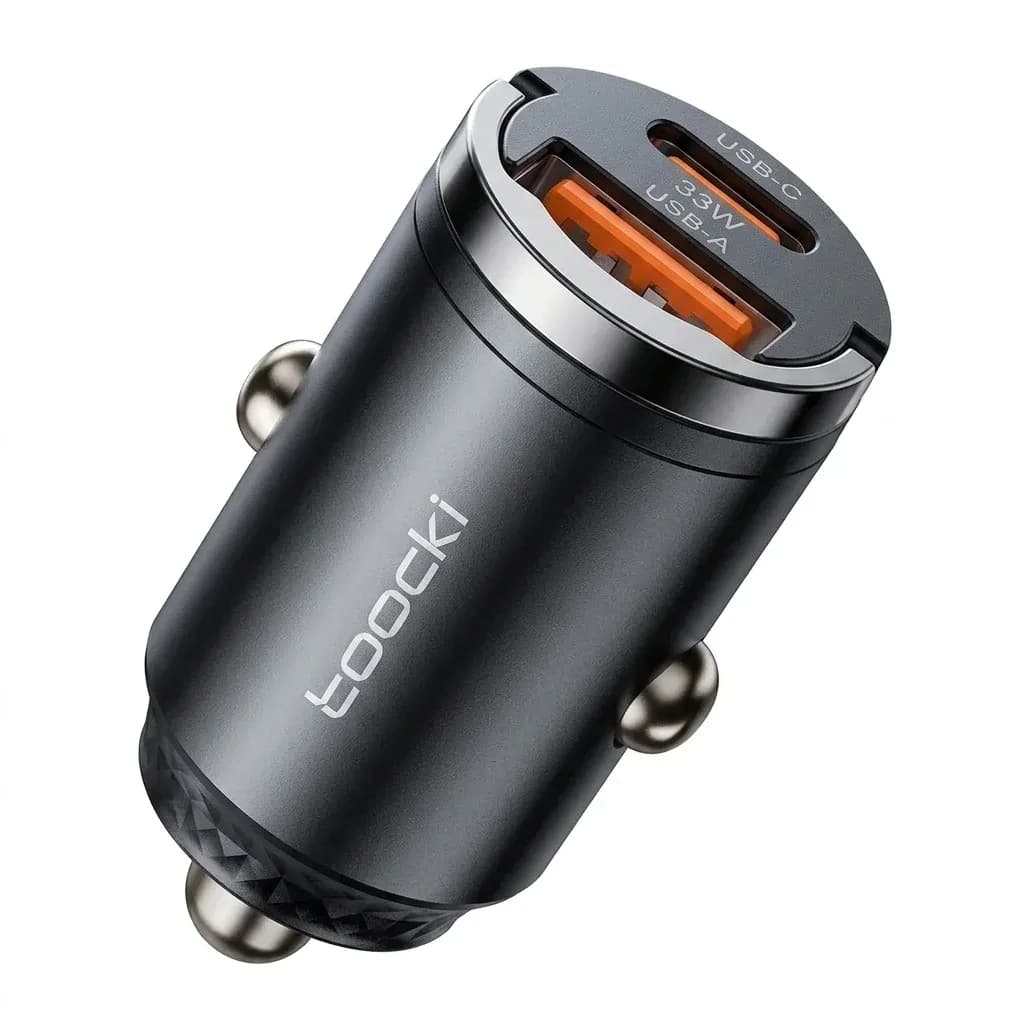

45W charging in a compact shell
This charger solves a common in-car problem: phones and tablets that lose battery faster than the drive finishes. With up to 45W output on USB-C, it is aimed at drivers who want a meaningful charge during short commutes, not just a slow maintenance trickle.
The practical benefit is speed you can feel in daily use, especially for newer iPhone, Samsung, Xiaomi, and Huawei devices that support fast protocols. At this level, a 20-minute drive can do more than an ordinary 12W adapter, which is exactly the gap many AliExpress car chargers still leave open.
Pull-ring removal makes a small detail matter
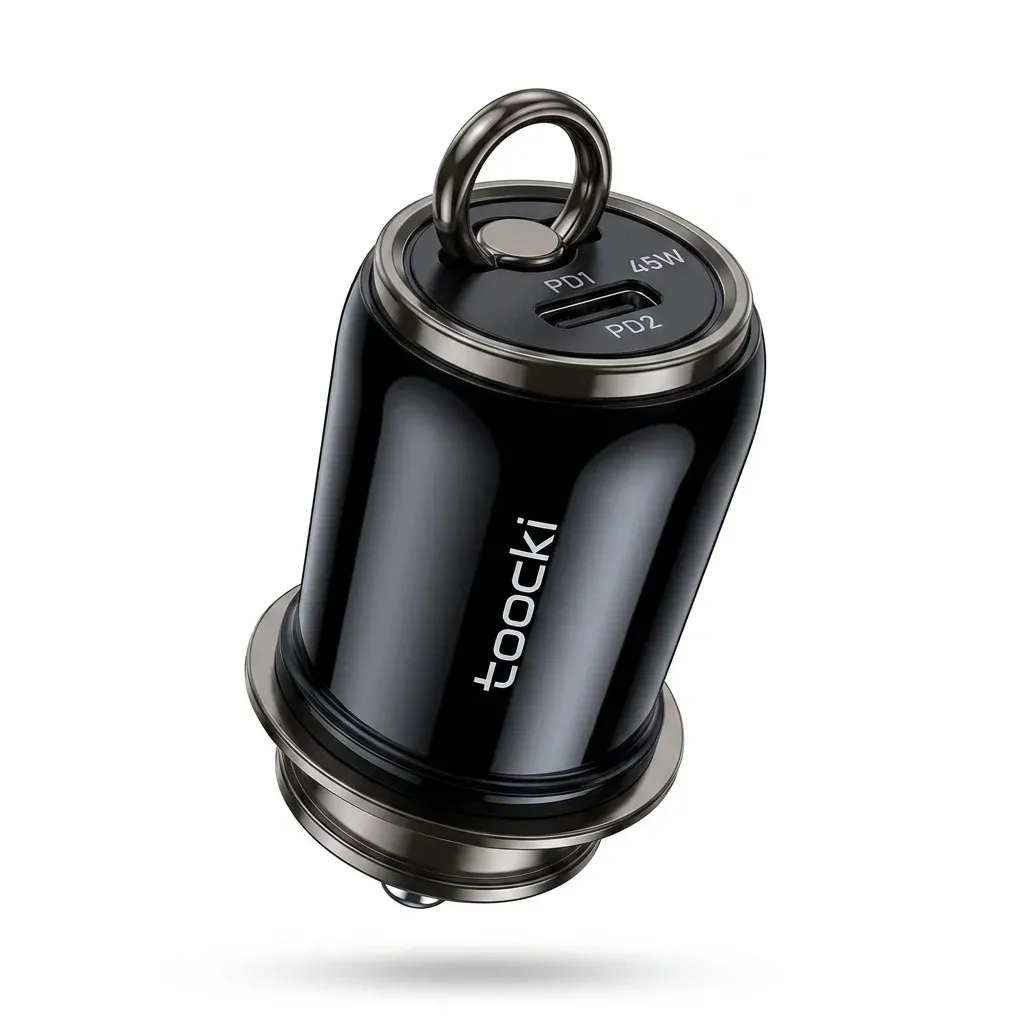
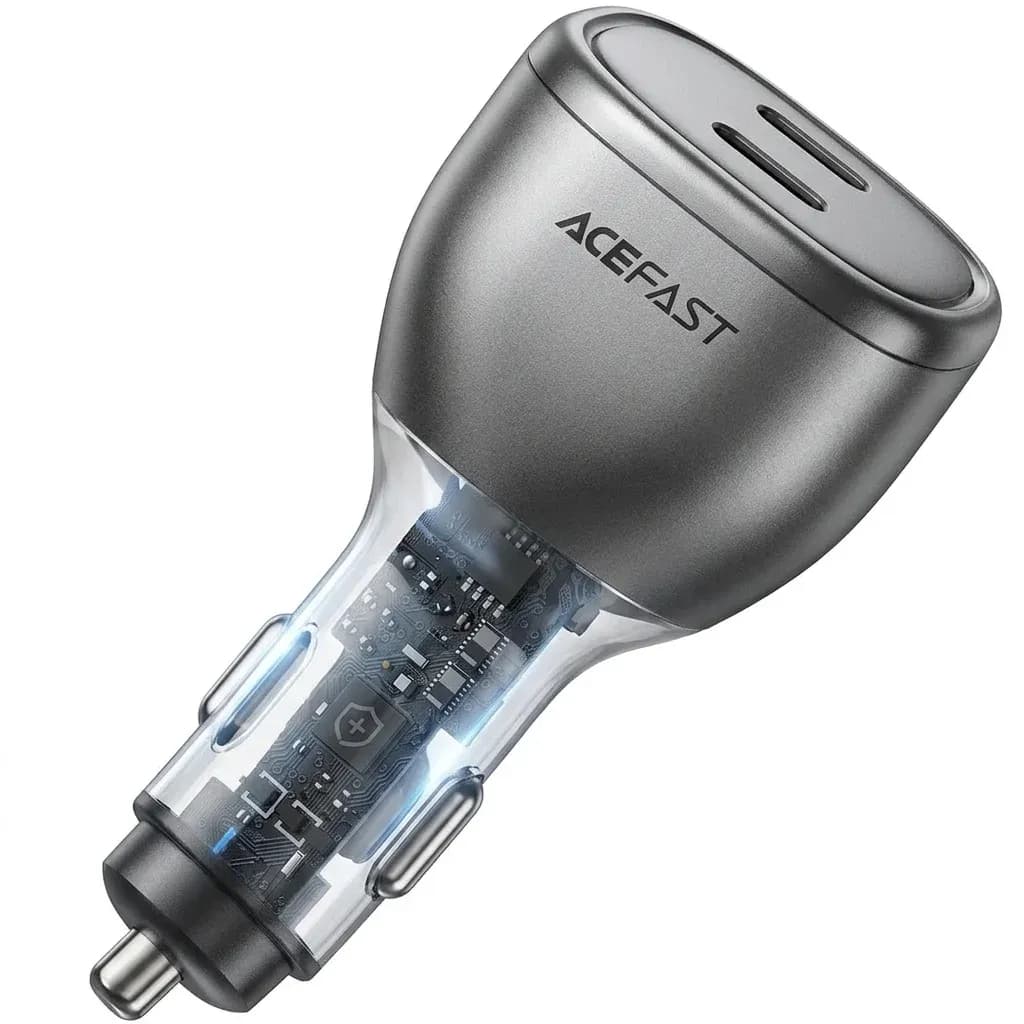
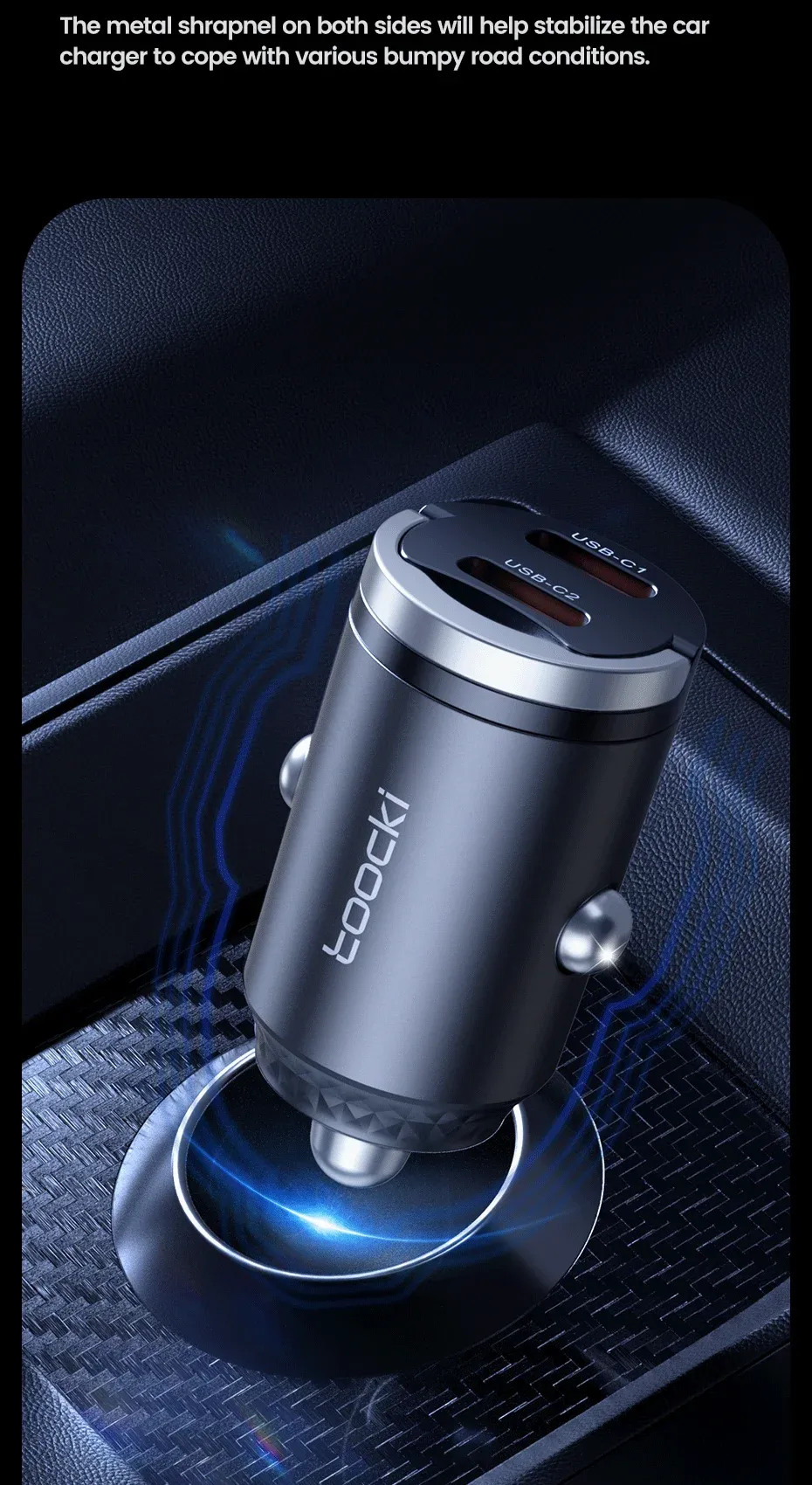
The pull-ring is the feature that gives this model its identity. Instead of digging around the socket with fingernails or twisting the charger body, you get a built-in handle that helps lift it out cleanly when you switch cars or want to remove it after parking.
That sounds minor until you use a tight 12V socket tucked low in the console, where a smooth grip saves time and avoids scuffing the trim. It is a simple ergonomic touch, and it is the sort of detail that separates a generic adapter from a more thoughtfully designed one.
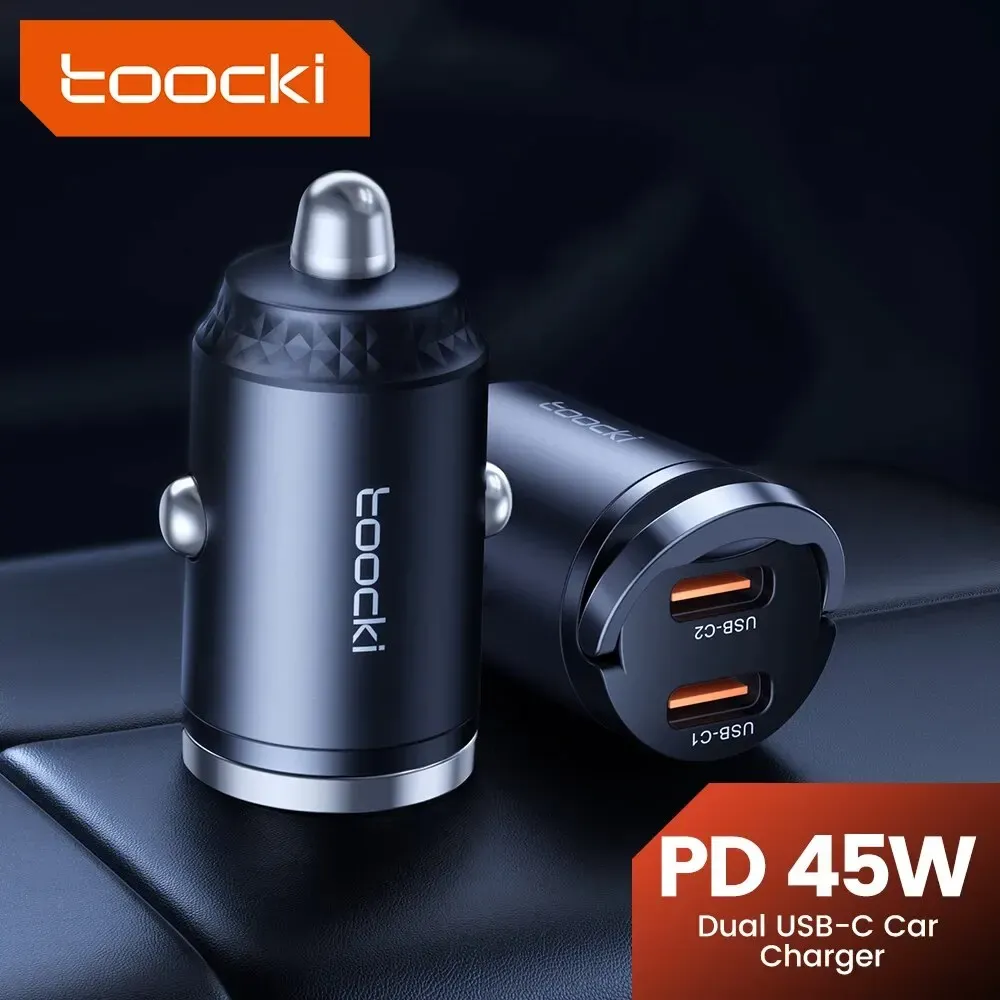
Two USB-C ports, one clear charging profile
Both USB-C ports support up to 45W max, with PPS, PD3.0, QC3.0, AFC, and FCP listed in the protocol mix. In practice, that means better compatibility across modern phones and fewer cases where a device falls back to slow charging because the handshake is too limited.
The total output is capped at 5.0V⎓4.8A, so the charger is best understood as a high-speed single-device or mixed-use solution rather than a full-power dual-device powerhouse. If you often charge two phones at once, the shared output is worth noting before you rely on it for back-to-back fast charging.
Samsung PPS support is the standout use case
The strongest selling point is PPS 45W support, which makes this especially relevant for Samsung users who want Super Charge 2.0 behavior in the car. The product description even cites fast full-charge times for Galaxy S21+ and S22 Ultra, which shows the charger is tuned for devices that can actually use that extra wattage.
For iPhone users, the charger still makes sense because USB-C PD remains a practical standard for iPhone 8 through 15 series charging. The real advantage is not a flashy display or extra ports, but a protocol set broad enough to keep one adapter useful across mixed-device households.
What the build and certifications suggest
At 11.5g and 70 × 120 mm, this is a lightweight accessory that should sit discreetly in the socket rather than dominate the cabin. CE, FCC, and RoHS certifications add a useful layer of confidence for a low-cost charger, especially in a category where electrical consistency matters more than looks.
There are only a few real customer reviews, but the current feedback is positive overall, which fits the product’s positioning as a simple, functional fast charger. The absence of a screen or premium material finish keeps the focus on utility, so the next question is whether that trade-off suits your car setup.