






Why this cable solves a common desk and home-theatre problem
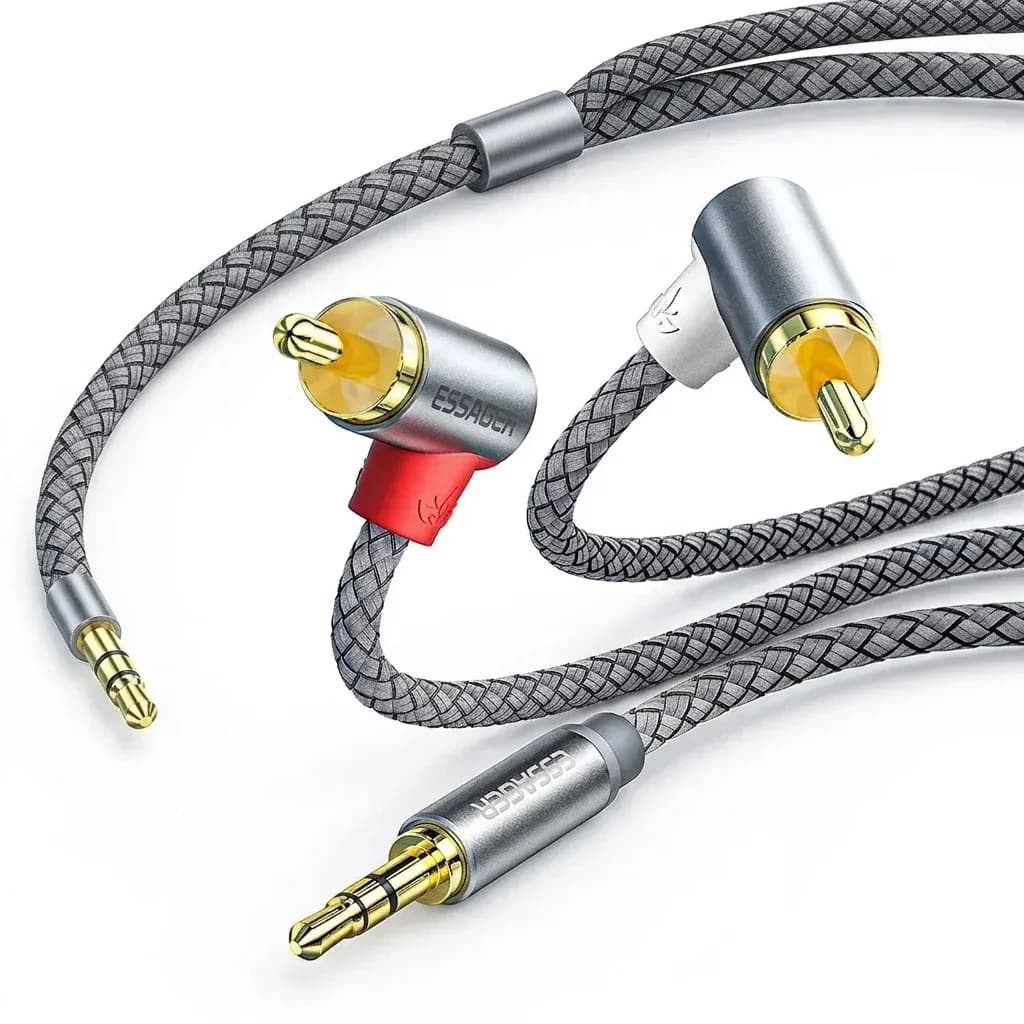
Many audio setups work fine until the cable has to bend sharply behind a TV, amplifier, or desktop speaker stack. This Essager lead tackles that exact issue with a 90° 3.5mm plug and a 2RCA split, so the connection sits flatter and feels less exposed.
It is the kind of small accessory that makes a system look more finished, especially when the RCA ports are crowded or close to a wall. The design is simple, but in the AliExpress Singapore niche that often matters more than flashy extras, so what does the build actually suggest?
90-degree plug geometry and why it matters in real setups
The angled connector is the headline feature because it reduces strain where many budget audio cables fail first. In practice, that means a cleaner route behind amplifiers, TV boxes, and desktop DAC-free speaker systems, with less risk of the plug sticking out awkwardly.
Users also note that the corner fit feels neat and stable, and one recurring point in the reviews is that the cable avoids obvious noise even when placed near other electronics. That is encouraging for a low-cost analogue cable, but the shielding and connector finish are what make that possible.
What 2RCA output gives you in everyday use
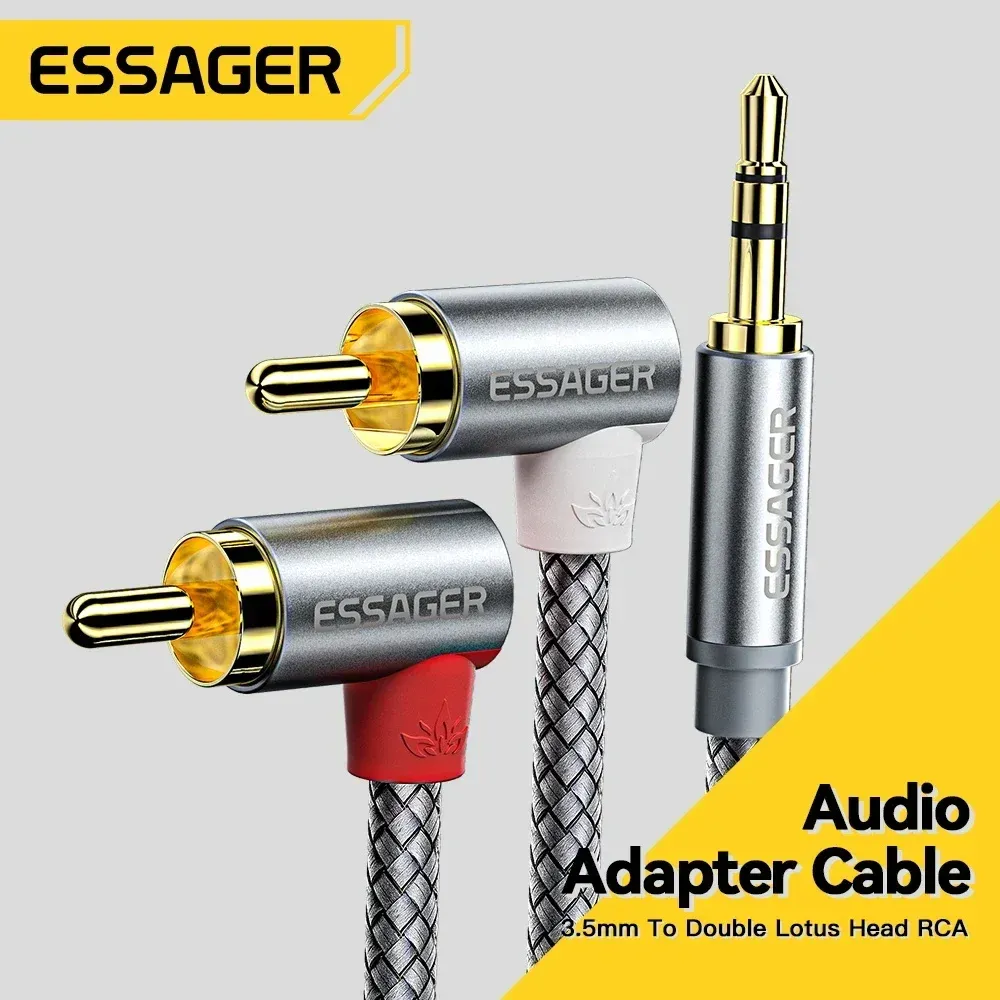
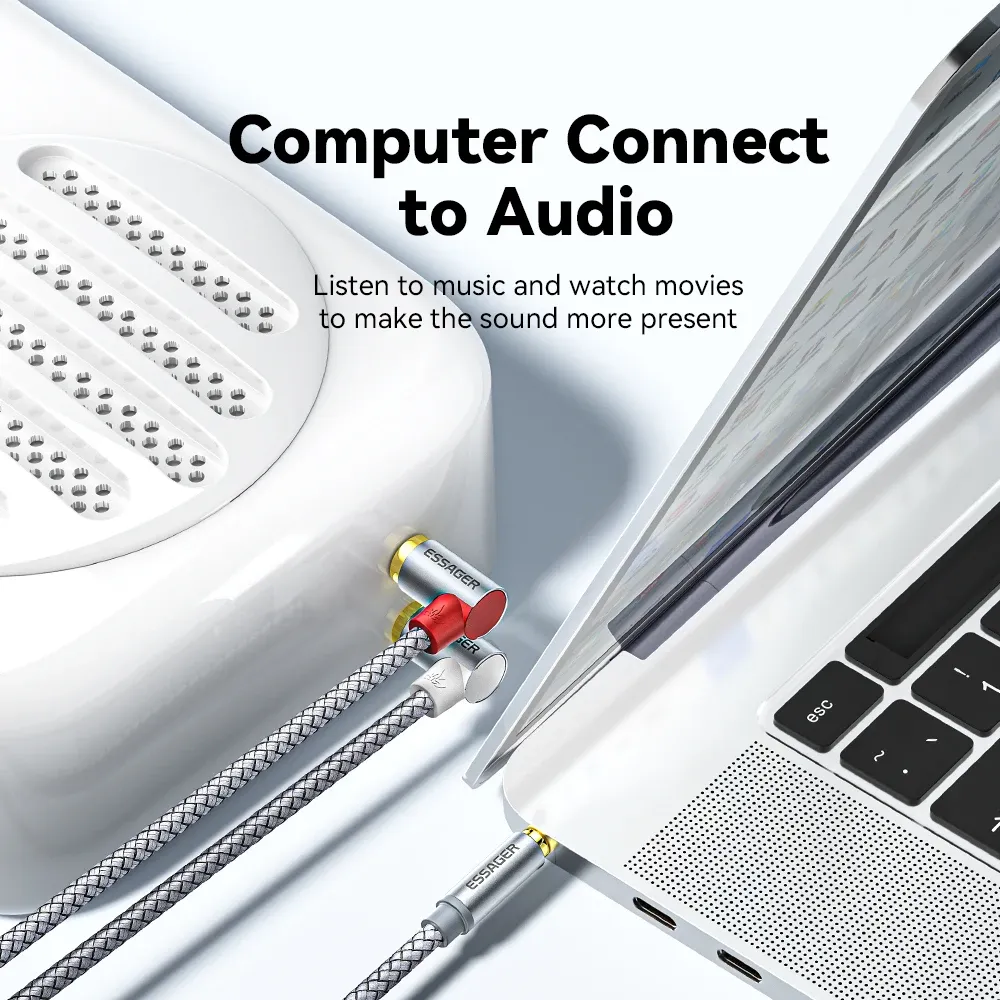
This cable is built for devices that need a 3.5mm stereo source converted into separate left and right RCA channels, such as an amplifier, home theatre receiver, or powered speaker input. It is a practical bridge for older audio gear and modern phones, laptops, MP3 players, and TV boxes.
Compared with a basic male-to-male AUX lead, the RCA split makes it much easier to feed a traditional hi-fi stack without adapters hanging off the back. If your goal is simple stereo playback rather than digital processing, this is the cleaner route, so how does the material choice support that?
Aluminum alloy, braided shielding, and the feel of a sturdier cable
Essager uses an aluminum alloy and PC shell with braided shielding, which gives the cable a firmer hand feel than the soft, floppy leads often bundled with cheap electronics. The dark grey finish also helps it blend into a media cabinet instead of drawing attention.
The available lengths from 1m to 5m make it flexible for both close-range desktop use and longer TV-to-amplifier runs. That range is useful because many audio problems are really placement problems, and the right length can keep signal paths tidy without stretching the cable.
Who gets the most value from it
This is best for users who want dependable analogue audio routing without spending much on accessories. Customers mention fast shipping and solid performance, which fits the product’s role as a low-friction, no-drama connector rather than a premium audiophile component.
If you need a cable for a wall-mounted TV, a narrow console shelf, or a car-style auxiliary setup, the angled plug makes the layout easier to manage. The main trade-off is that it is straightforward by design, so what should you expect before adding it to your setup?
Practical points to check before you choose a length
- Measure the distance from source device to RCA input before selecting 1m, 2m, 3m, or 5m.
- Use it for stereo line-level audio, not for speaker-wire duties or digital audio conversion.
- The right-angle head helps most when the source port faces a wall or another device.
- Its value is strongest in older hi-fi, TV box, and desktop speaker setups.