

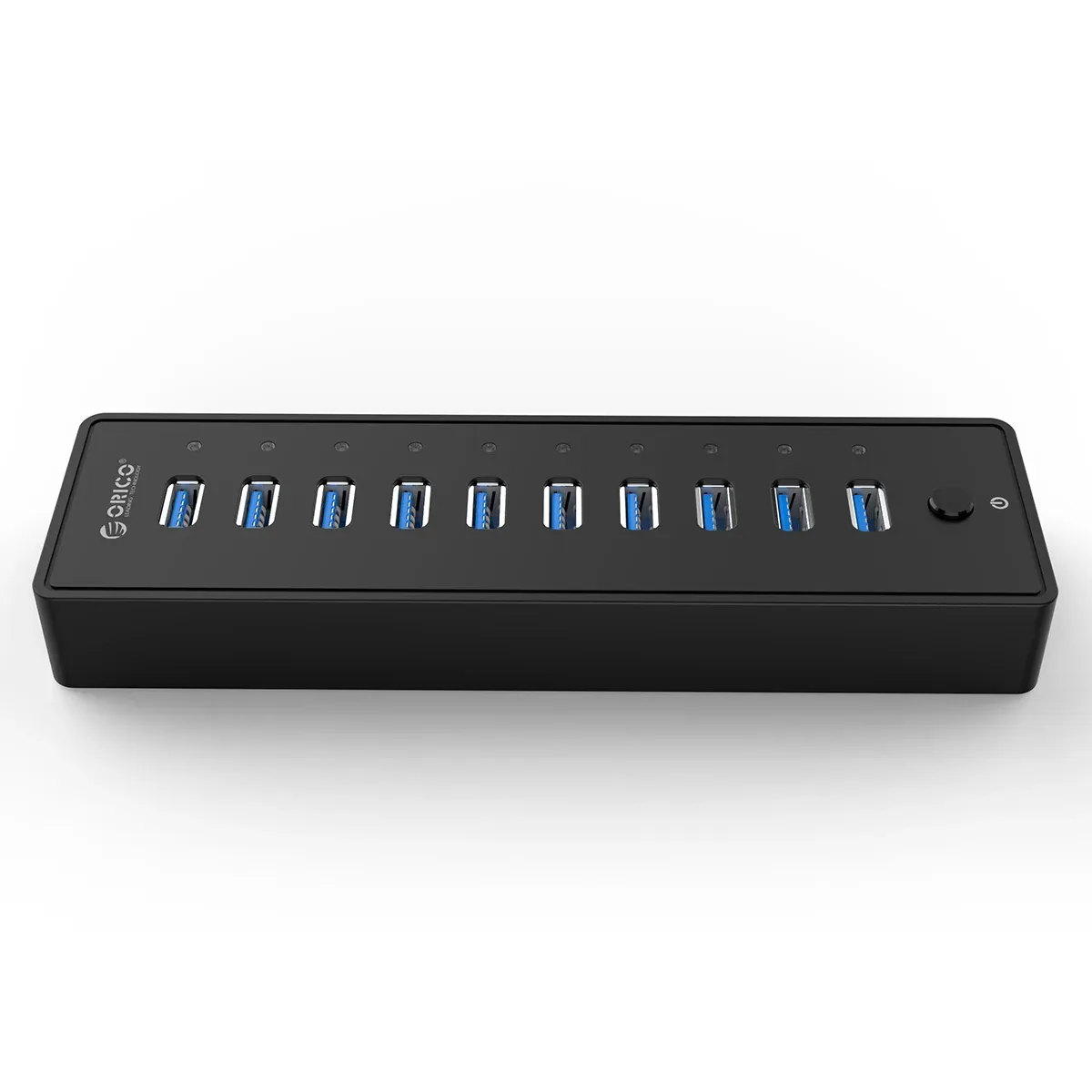





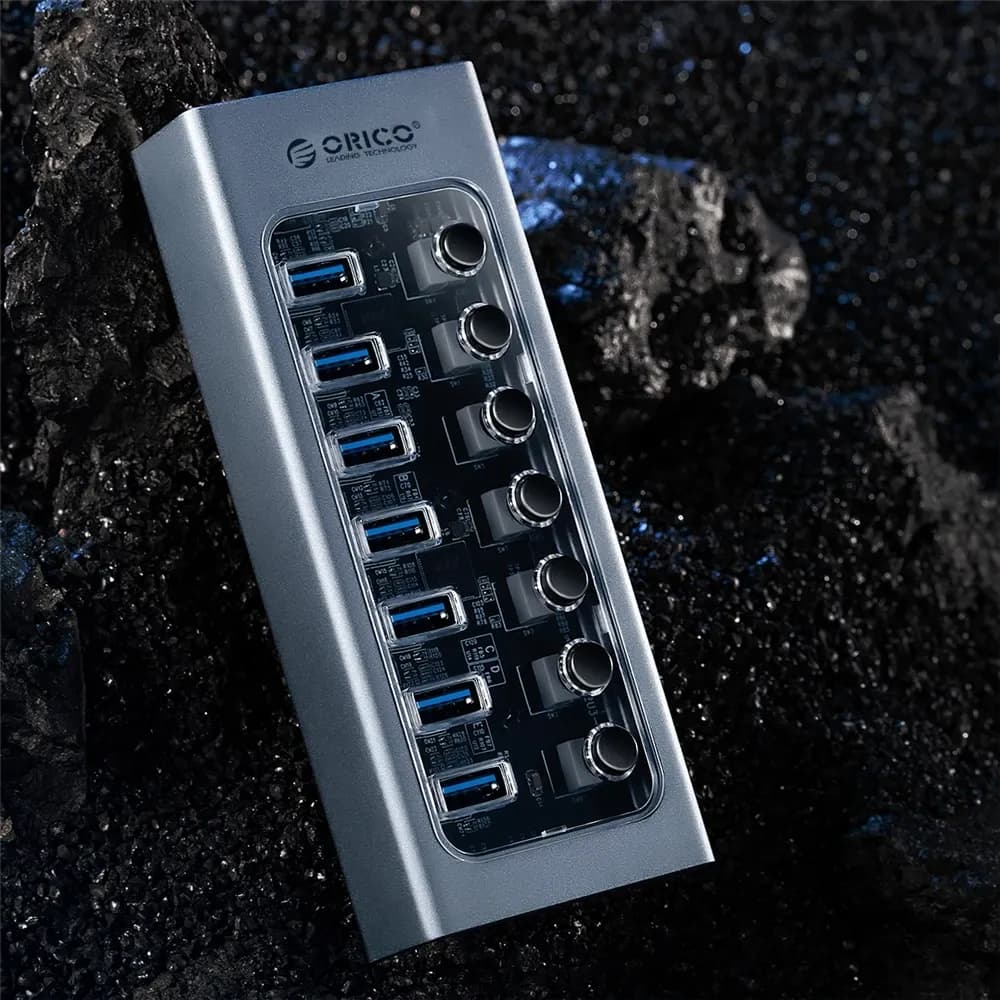
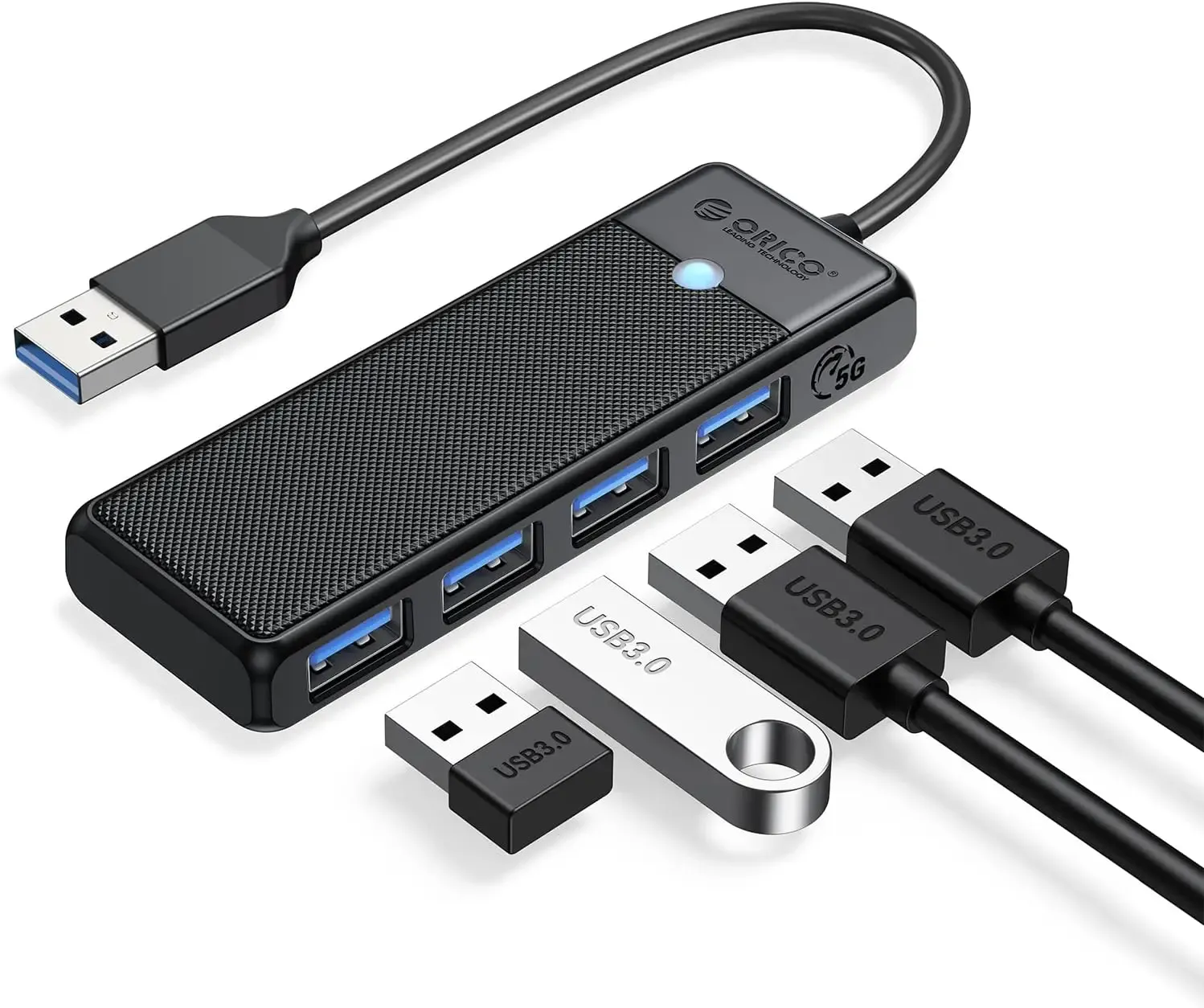
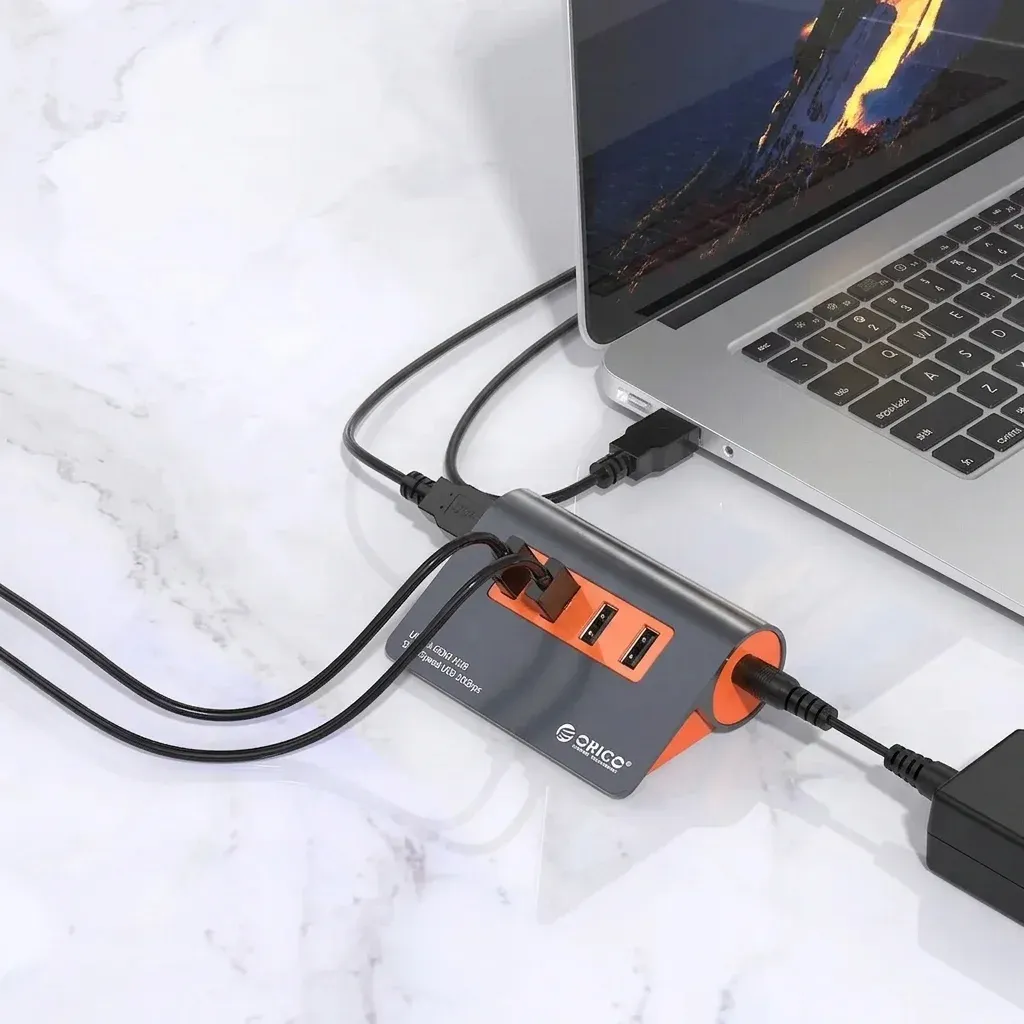
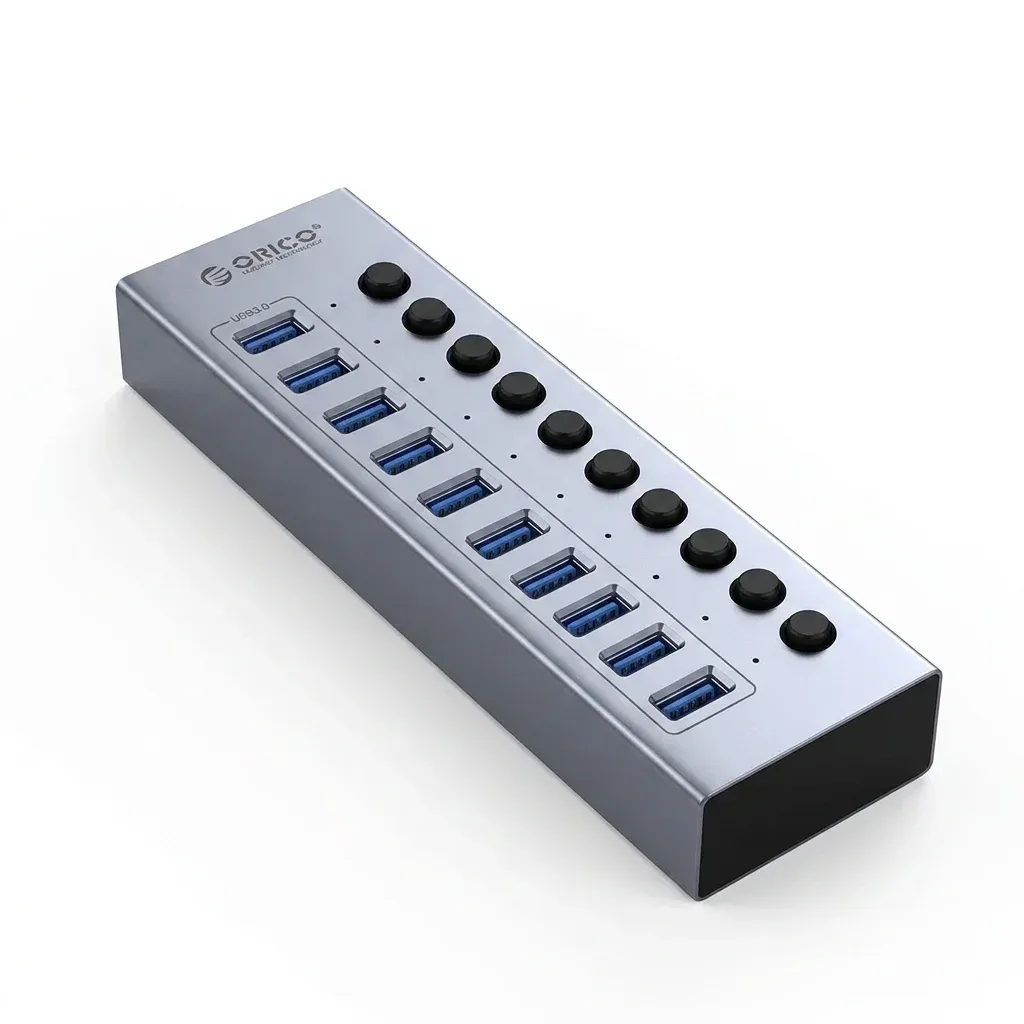

One cable in, ten stable connections out
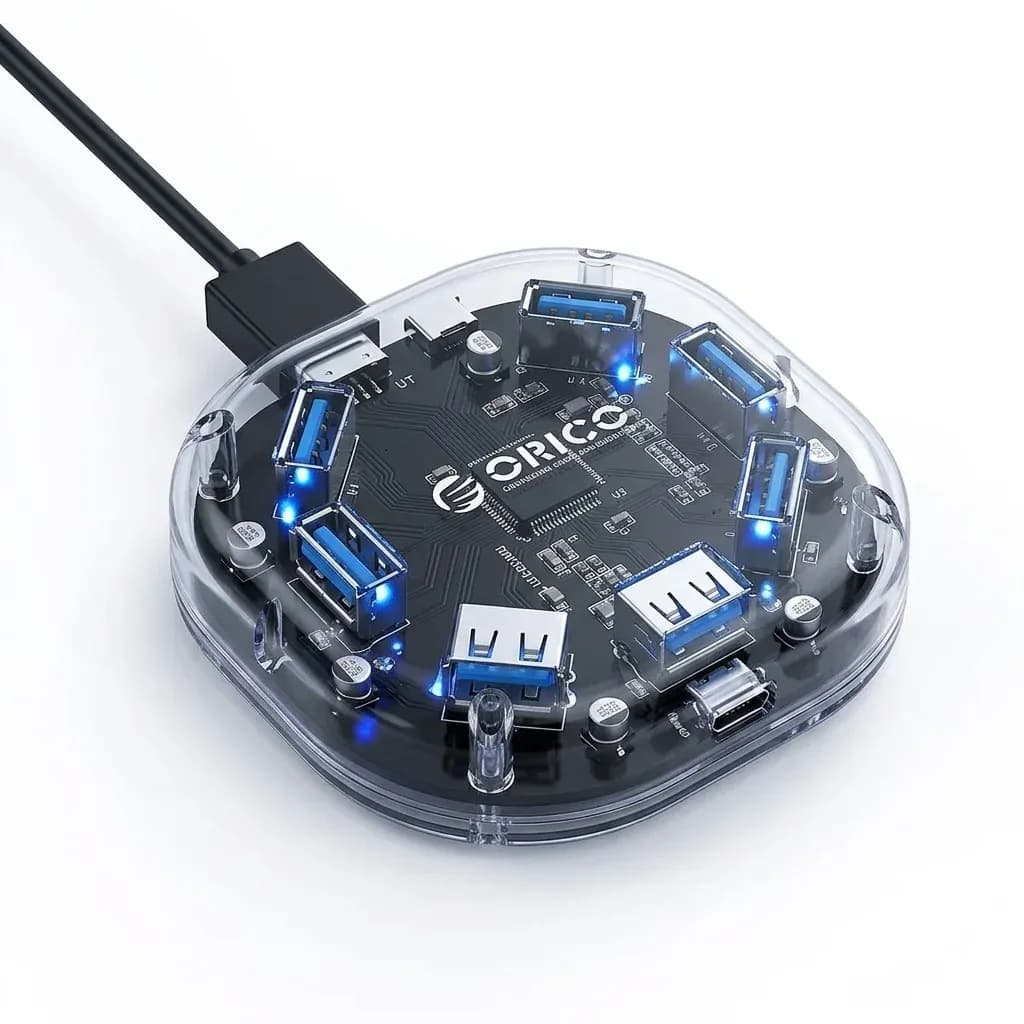
The ORICO P10 solves a common desktop problem: too many USB devices and too few usable ports. With ten USB 2.0 ports and a 12V power adapter, it is built to keep multiple peripherals connected without the sag you often see in bus-powered splitters.
That matters most when the setup includes devices that need steady current, such as external drives, card readers, or a webcam running for long sessions. The 1m cable gives enough reach to place the hub where it is easy to access, which is useful on both a crowded desk and a shared workstation.
Why the 12V adapter changes the experience
Powered hubs feel different from passive ones because they are not forced to draw everything from the host computer. In practice, that means fewer dropouts when several ports are occupied at once, and a better chance of keeping older accessories running reliably.
According to users of similar Orico hubs, the main benefit is consistency rather than raw speed, since this model is limited to USB 2.0 standards. If your workflow is built around keyboards, mice, printers, dongles, and backup drives, that trade-off makes sense, but fast SSD transfers point to a newer USB 3.x hub instead.
USB 2.0 is a limit, but not always a weakness
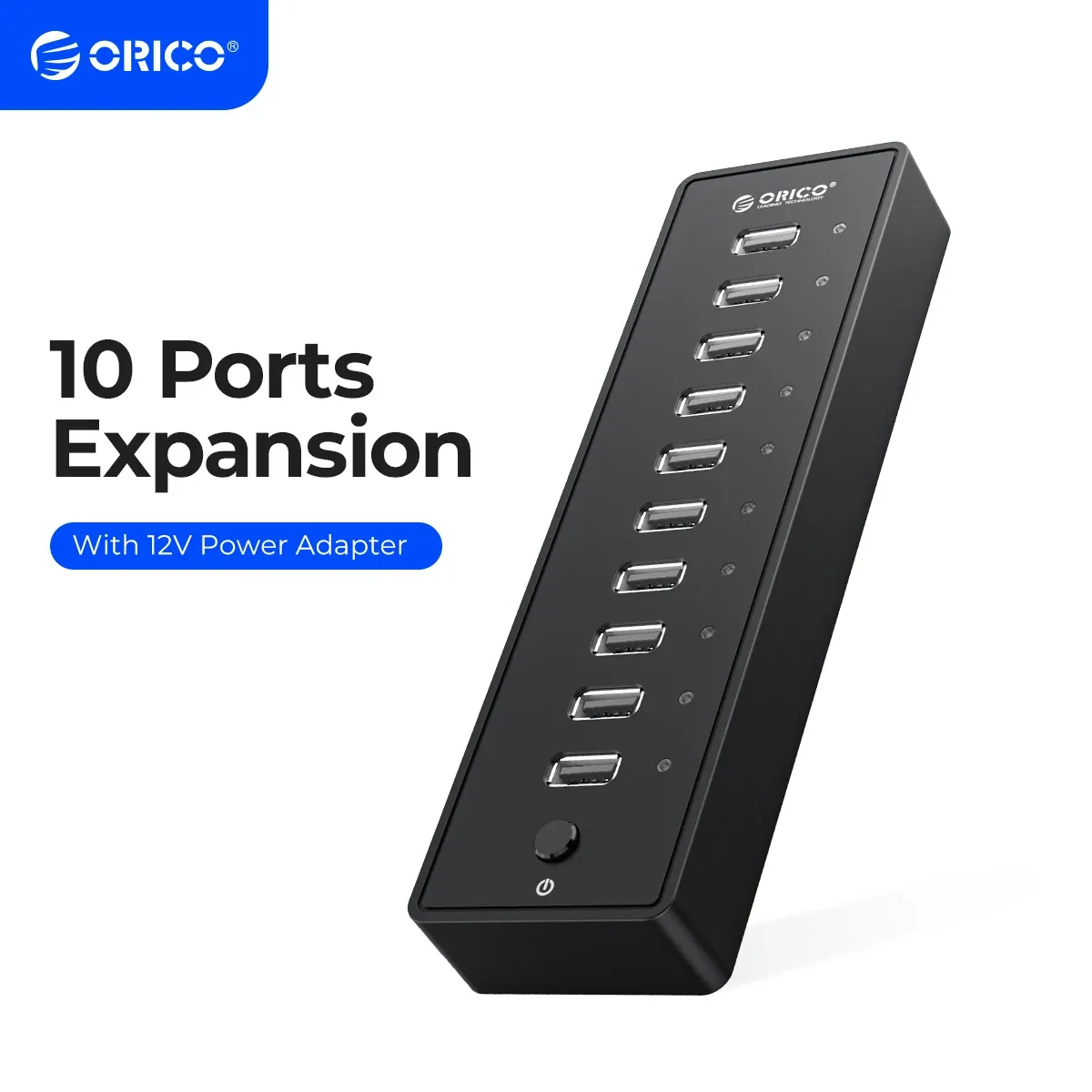
The P10 uses USB 2.0 interface hardware, so it is not the right choice for anyone chasing high-speed file copying. Its strength is in dependable expansion for low- to moderate-bandwidth accessories, where stability and port count matter more than transfer charts.
This also makes it a practical fit for office desks, lab benches, and home setups that stay plugged in for long periods. The ABS body keeps the unit light at 172 x 72 x 26.5 mm, while the compact footprint helps it sit flat beside a monitor stand or laptop dock, which raises the next question: who gets the most value from it?
Best use cases for laptops and desktops
Laptop users benefit most when a single USB-A port has to support a mouse receiver, storage drive, and phone cable at the same time. Desktop users get a cleaner front-end for accessories that would otherwise require reaching behind the tower.
The hub supports Windows, macOS, and Linux without driver installation, so it works like a straightforward expansion tool rather than a software-dependent accessory. That plug-and-play approach is one reason it fits mixed-device environments, especially where people want one hub to serve several machines.
What the build tells you before you plug it in
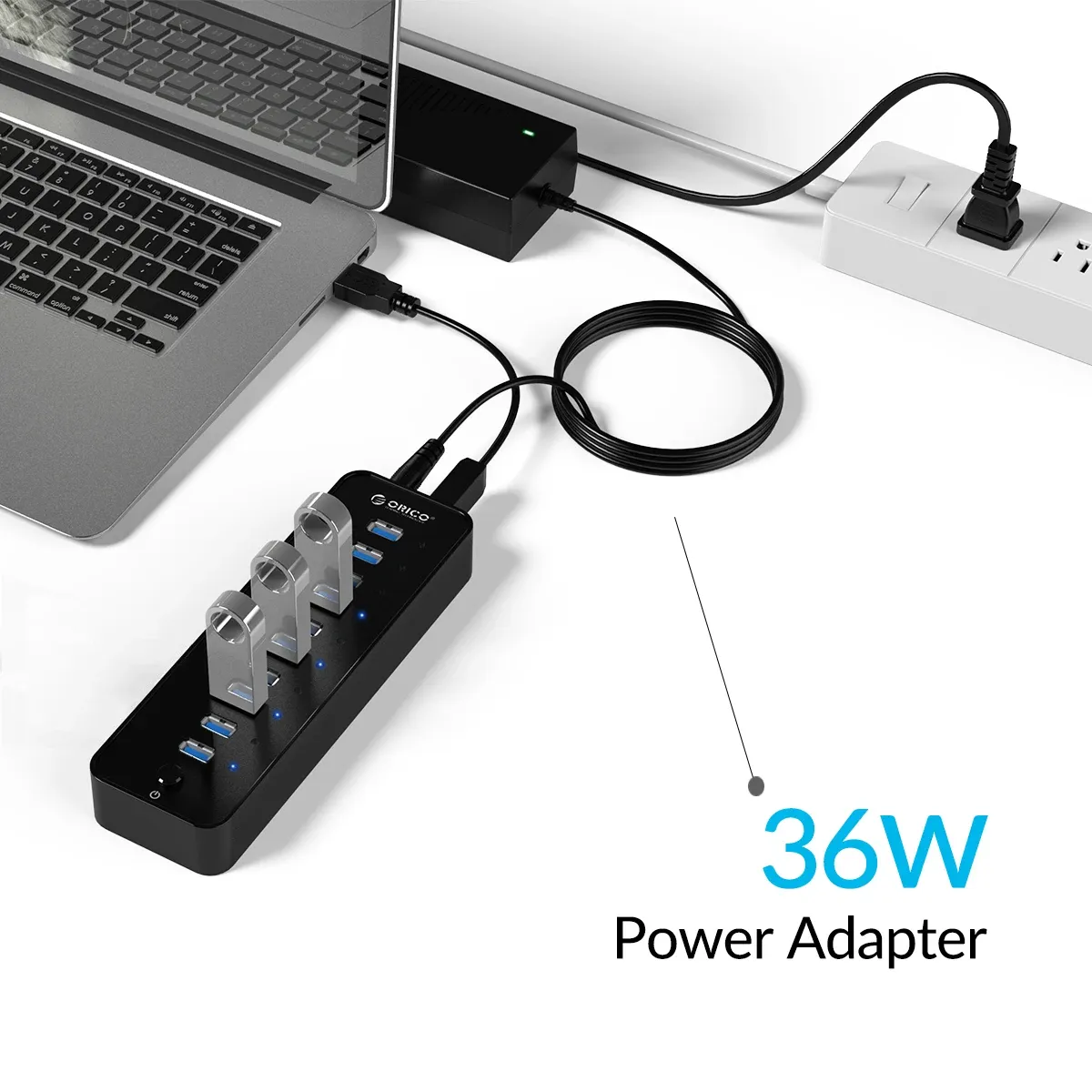
The ABS shell is practical rather than premium-looking, but it should handle normal desk use well. The CE certification and the included EU plug signal a product aimed at standard consumer setups, not a specialty industrial rack.
There are no individual port switches or charging-focused extras here, so the design stays simple and uncluttered. That simplicity is useful if you want a hub that behaves like an extension of the computer, not another device that needs managing every day.
Where this hub fits in the AliExpress USB market
In the AliExpress Singapore USB hub category, the P10 sits in the useful middle ground between basic passive splitters and more expensive multi-function docks. It is a sensible pick when the goal is connection count and steady power, not video output, Ethernet, or USB-C expansion.
For shoppers comparing options, the biggest decision is whether USB 2.0 is enough for their setup. If the answer is yes, the P10 offers a straightforward powered layout that solves port shortages without adding complexity, and that is exactly what many desk setups need.